
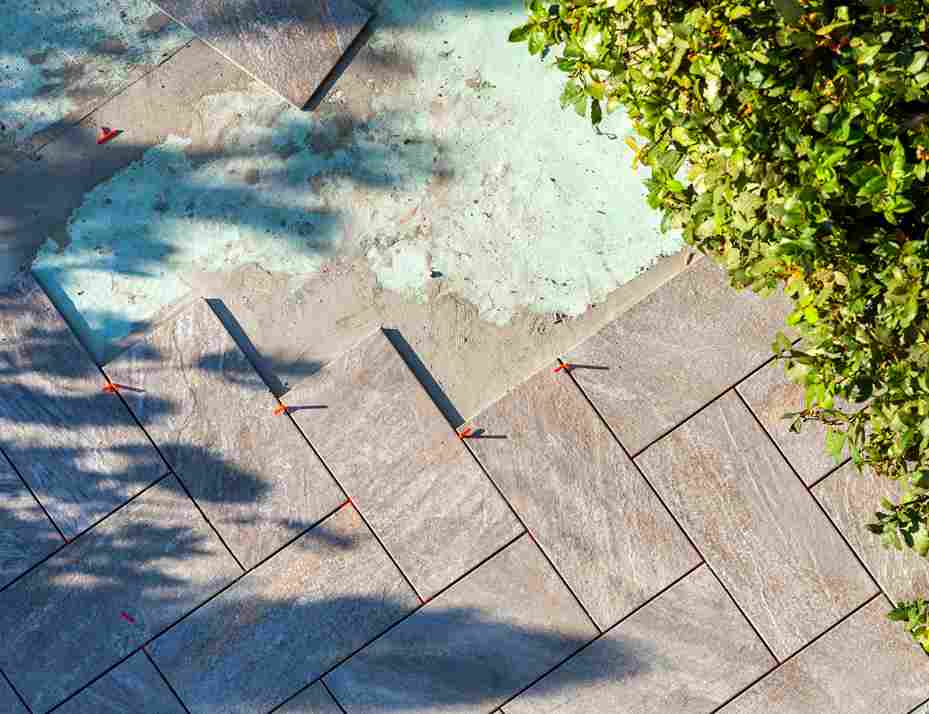
A stone patio is one of the more significant outdoor investments a homeowner can make, and in Ithaca the decision about which type of stone to use carries more weight than it would in a milder climate. The Finger Lakes freeze-thaw cycle puts hard structural demands on any paved surface. Water that works its way beneath a patio surface and freezes expands with enough force to shift individual stones, crack mortar joints, and buckle an entire field of pavers if the base preparation underneath was not built to handle it. The stone type matters, but only after the base is right.
Homeowners in Collegetown and Cornell Heights regularly deal with this reality on older properties where previous patio installations were done without adequate base depth or drainage planning. A stone surface that looks perfect at installation and starts rocking and heaving after two winters is not a material failure; it is an installation failure that would have happened regardless of which stone was chosen. Understanding the types of stone patios available, and how each performs in this region’s conditions, puts you in a better position to make a decision that lasts.
This article covers the most common types of stone patios installed on Ithaca residential properties, the performance characteristics of each material, what professional installation involves, and the cost and timing factors specific to the Tompkins County market.
Key Takeaways
- The best types of stone patios for Ithaca properties use dense, low-porosity materials like bluestone, quartzite, and natural fieldstone that resist freeze-thaw damage.
- Base preparation matters as much as material selection; a compacted gravel base of six to eight inches is the regional standard for patio installations in Ithaca.
- Patio stone installation in the Ithaca area typically runs $18 to $35 per square foot installed, with material choice and layout complexity driving most of the variation.
- Drainage pitch across the patio surface is critical in Ithaca’s wet climate; a surface that holds water accelerates base saturation and freeze-thaw damage.
- Dry-laid patios offer more freeze-thaw flexibility than fully mortared surfaces, but mortared installations provide greater structural rigidity for larger or more formal applications.
- Ithaca’s installation window runs from late April through mid-October, with spring and early summer being the preferred time for patio projects.
Types of Stone Patios: What Works in Ithaca’s Climate
The types of stone patios that hold up in Ithaca are defined by one primary characteristic: low water absorption. A patio stone that absorbs moisture through its surface allows that water to penetrate to the base, where it freezes and expands. Over multiple winters, that cycle works stones out of level, pops mortar joints, and creates trip hazards that worsen each season. Dense stone with a tight grain structure simply does not allow that process to begin.
Ithaca contractors and homeowners have learned through experience which materials perform reliably in this region and which ones look good at the showroom but fail on the property. That accumulated knowledge shapes what reputable companies recommend, and it should shape what you ask for when getting quotes. A contractor who proposes soft sandstone or untested imported stone for a Tompkins County patio installation is either unfamiliar with local conditions or prioritizing margin over longevity.
VP Designs Lawn & Landscape has installed stone patios across Ithaca and the surrounding areas in a range of materials and styles, from informal dry-laid fieldstone in residential backyards to formal cut bluestone on properties with more structured outdoor spaces. The company’s material recommendations reflect actual performance in the Finger Lakes climate, not catalog descriptions. You can explore the full range of hardscape and stonework services to understand how patio installation fits within a broader outdoor project.
The sections below break down the most common patio stone options, their specific strengths and limitations in Ithaca conditions, and what each one looks like in a finished installation.
Bluestone Patios
Bluestone is the benchmark patio material in the Ithaca area and across upstate New York generally. It is a dense sandstone quarried in the Southern Tier of New York and Pennsylvania, which means it is locally sourced, well-proven in regional winters, and competitively priced relative to imported stone at the same quality level. Its tight grain structure resists water absorption, and it has decades of installation history on properties throughout Tompkins County that confirms its performance through the freeze-thaw conditions this region delivers every winter.
Cut bluestone in uniform rectangular or square pieces produces a clean, formal patio surface that integrates well with modern and traditional architecture alike. The consistent sizing makes layout more precise and installation faster than irregular stone, which keeps labor costs lower relative to the material cost. Irregular bluestone, sometimes called thermal or natural cleft, has organic edges and a rougher surface texture that reads as more casual and blends naturally into garden settings and informal outdoor spaces.
The natural cleft surface of bluestone provides reliable traction when wet, which matters on a patio surface used through the full Ithaca season, including the wet springs and early fall rains that can make smooth surfaces hazardous. Honed or polished bluestone finishes, while visually appealing, become slippery in shaded or north-facing areas where surfaces stay damp longer. On most residential properties, natural cleft finish is the more practical choice for all-season safety.
Flagstone Patios: Quartzite, Limestone, and Sandstone
Flagstone is a broad category that covers any flat stone used for paving, and the performance differences between flagstone types are significant enough to treat each one separately rather than assuming they behave the same way in Ithaca’s conditions.
Quartzite flagstone is one of the strongest performers among all the types of stone patios available in this region. It is extremely dense, has very low water absorption, and holds its color and surface integrity well through repeated freeze-thaw exposure. Quartzite typically costs more than other flagstone options, but its longevity justifies that premium on a patio that will see Ithaca winters for the next twenty or thirty years. The natural variation in quartzite’s color, which ranges from warm gold and rust tones to cool grays and silvers depending on the source, makes each installation visually distinct.
Limestone is attractive and widely available, but its suitability for Ithaca patio installations depends almost entirely on the specific stone’s porosity. Dense, low-absorption limestone handles freeze-thaw conditions adequately; porous varieties absorb water freely and begin to spall and flake at the surface within a few winters. Asking for absorption rate data on any limestone being proposed for a local patio project is a reasonable request, and a contractor who cannot provide it or dismisses the question is not one to trust with a long-term installation.
Softer sandstones sourced from warm-climate regions are the most problematic choice for Ithaca patios. Their surface begins deteriorating visibly after the first or second winter, and by year three or four the patio has a weathered, granular appearance that no amount of sealing will reverse. The lower upfront material cost evaporates quickly when the surface needs replacement within five to seven years rather than thirty.
Fieldstone and Cobblestone Patios
Natural fieldstone patios have a long history on Ithaca residential properties and a character that no manufactured material replicates. Rounded or roughly shaped fieldstone set in a mosaic or irregular pattern creates an outdoor surface that looks like it belongs to the property rather than something ordered from a catalog. It handles the climate well when the base is built correctly, and its visual texture becomes more refined with age rather than deteriorating.
Dry-laid fieldstone set in compacted stone dust or decomposed granite rather than mortar has a practical advantage in Ithaca’s freeze-thaw conditions. Small amounts of movement can occur within the surface without causing structural damage, because individual stones can shift slightly and be reset rather than cracking under pressure. That flexibility makes dry-laid installations more forgiving than fully mortared surfaces on properties with challenging drainage or variable soil conditions.
Cobblestone patios, set with smaller uniform rounded stones in a tight pattern, produce a more formal result than irregular fieldstone and are labor-intensive to install correctly. Individual stones must be set at consistent height and pitch to avoid creating an uneven surface, and the jointing material between them needs to handle freeze-thaw movement without cracking and opening gaps. On properties where this level of craftsmanship is appropriate, the result is a surface that is genuinely timeless. On a budget-driven project, it is one of the more expensive types of stone patios to install per square foot of finished surface.
Concrete Pavers Versus Natural Stone
Concrete pavers occupy a distinct position among the types of stone patios discussed in this market. They are not natural stone, but they are a common alternative and worth addressing honestly. Quality concrete pavers from established manufacturers have improved significantly over the past two decades, and premium products handle Ithaca’s freeze-thaw conditions better than lower-grade options. They are consistent in size, which makes installation more predictable, and available in profiles that credibly approximate the look of natural stone in certain applications.
The practical trade-offs are real, though. Concrete paver color fades over time in a way that natural stone does not, and the manufactured appearance becomes more apparent as the surface ages. Natural bluestone and fieldstone develop a patina with age that increases their visual appeal; concrete pavers do not have an equivalent aging process. For homeowners weighing first cost against long-term appearance, natural stone consistently outperforms manufactured pavers over a twenty-plus year horizon on properties where appearance standards are a priority.
For projects where budget is the primary constraint, quality concrete pavers are a more durable choice than soft sandstone or marginal flagstone, and they outperform budget-grade imported stone in Ithaca’s conditions when installed with the same base preparation that natural stone requires.
What Professional Patio Installation Involves
Understanding what distinguishes professional from DIY installation is essential for any of the types of stone patios discussed here. The most visible part of a patio, the stone surface, is only the final step in a process where the earlier, invisible steps determine whether the finished installation holds its level and its appearance for decades.
Excavation and base preparation are where professional patio installation earns its cost in this region. A properly built patio base in Ithaca requires removing four to six inches of existing soil, compacting the subgrade, and installing six to eight inches of crushed gravel in compacted lifts before any setting material or stone goes down. Most online DIY guides recommend four inches of base material, which is adequate in climates without significant frost depth. In Ithaca, that standard produces a patio that begins to shift and heave within one or two winters.
Drainage pitch is the second critical factor that separates installations that hold from ones that fail. A patio surface must slope away from the house at a consistent pitch, typically one to two percent, to direct surface water toward the yard rather than allowing it to pond on the surface or drain back toward the foundation. A patio that holds standing water after a rain event is saturating its base with every storm, and each freeze-thaw cycle that follows accelerates the deterioration process. Getting the pitch right requires reading the existing grade of the surrounding yard and planning the installation around it, not just laying stone flat and assuming water will find its own way. For properties where the patio connects to planted beds or lawn areas, coordinating hardscape drainage with professional landscape maintenance keeps the surrounding yard healthy alongside the new surface.
Cost and Timing for Stone Patio Installation in Ithaca
Stone patio installation in Ithaca runs $18 to $35 per square foot installed. Bluestone and quartzite flagstone sit toward the higher end of that range. Concrete pavers and simple fieldstone installations sit lower. Site conditions, including slope, access constraints, and whether grading corrections are needed before the base can be built, also push costs upward on more complex properties. A 300 square foot patio, a size that creates a functional outdoor gathering space on a typical residential lot, falls in the range of $5,400 to $10,500 installed depending on material and site.
Ithaca’s installation window runs from late April through mid-October. Spring and early summer are the preferred times for patio projects because they allow the base material to fully settle and compact before winter, and give any mortared joints adequate cure time well ahead of the first freeze. Fall installations are workable through September and into early October, but tight timelines increase the risk that mortared work does not cure fully before cold arrives. The full range of outdoor services can be planned in sequence so a patio project coordinates with any planting, walkway, or grading work happening on the property in the same season.
Spring schedules fill fast across Ithaca. Reaching out to a contractor in February or March puts your project at the front of the queue rather than competing with everyone who contacts them when the ground thaws in April. If your property will also need snow and ice management after the patio is complete, coordinating that service at the same time simplifies winter preparation and ensures the surface is protected correctly from the first storm.
When you are ready to move forward with a stone patio or want to talk through which material suits your property’s conditions and your design goals, VP Designs Lawn & Landscape is the local resource for that conversation. The company serves Ithaca, New York and the surrounding areas with stone patio installations built for the Finger Lakes climate, starting with proper base preparation and ending with a surface that holds its level and its appearance for the long run. Call (607) 592-5505 to get started.
Frequently Asked Questions About Types of Stone Patios
Q: What are the best types of stone patios for Ithaca’s climate?
A: Bluestone and quartzite flagstone are the strongest performers in Ithaca and the broader Finger Lakes region. Both are dense, low-porosity materials that resist freeze-thaw damage. Bluestone has the additional advantage of being locally quarried in upstate New York, making it both regionally proven and competitively priced relative to imported stone at the same durability level.
Q: How much do stone patios cost to install in Ithaca, NY?
A: Stone patio installation in the Ithaca area runs $18 to $35 per square foot installed. A 300 square foot patio falls in the range of $5,400 to $10,500 depending on material and site conditions. Bluestone and quartzite sit at the higher end; concrete pavers and fieldstone options sit lower. Grading corrections, access limitations, and drainage complexity can push costs above that baseline on more challenging properties.
Q: What is the difference between dry-laid and mortared stone patios?
A: Dry-laid patios set stones in compacted stone dust without mortar, allowing minor freeze-thaw movement without cracking. Mortared patios bond stones with mortar for a tighter, more rigid surface that better suits formal designs and larger surface areas. In Ithaca’s climate, dry-laid installations are more forgiving on sites with variable drainage, while mortared installations require precise base preparation and full cure time before winter to hold their joints through the first freeze.
Q: Can I install a stone patio myself in Ithaca to save money?
A: Basic fieldstone stepping areas in informal settings are manageable for experienced DIYers. A structural patio surface used for outdoor living is a different project. The base preparation requirements for Ithaca’s frost depth, the drainage pitch needed across a full patio surface, and the material handling involved in setting stone at consistent level all require skills and equipment that produce significantly better results in professional hands. The cost of rebuilding a failed patio after one or two winters exceeds the savings from DIY installation.
Q: Does the type of patio stone affect winter maintenance?
A: Yes. Bluestone and quartzite handle standard rock salt application reasonably well, though minimizing chemical de-icers extends surface life on any material. Softer sandstones and some concrete pavers are more vulnerable to surface spalling from repeated salt exposure. Discussing winter maintenance as part of a broader snow and ice management plan before installation begins helps you choose a material that holds up through both the freeze-thaw cycle and the winter care routine your property requires.
Q: How long does a professionally installed stone patio last in Ithaca?
A: A bluestone or quartzite patio installed with proper base preparation and drainage pitch can last thirty to fifty years with minimal intervention. Fieldstone dry-laid patios have a comparable lifespan when individual stones are reset as needed. Concrete paver patios installed correctly typically last fifteen to twenty-five years before color fading or surface wear becomes significant. In every case, base preparation is the determining factor; quality stone on a poor base fails faster than modest stone on a correct one.
Q: When is the best time to install a stone patio in Ithaca?
A: Late April through early July is the ideal window. Spring installations give the base material the full season to settle and compact, and mortared work cures well ahead of the first fall freeze. Contacting a contractor in late winter, February or March, secures better scheduling for a spring start and avoids the late-spring backlog when every homeowner in Ithaca is trying to start their outdoor projects at the same time.
Conclusion
Choosing among the types of stone patios for an Ithaca property comes down to matching material density and surface character to what the property needs aesthetically and what the Finger Lakes climate demands structurally. Bluestone and quartzite consistently deliver on both counts. Fieldstone adds regional character that manufactured materials do not replicate. Concrete pavers offer a cost-accessible middle ground when natural stone is outside the budget. In every case, the base preparation and drainage planning beneath the surface matter as much as the stone on top of it.
A stone patio built correctly for Ithaca’s conditions requires an investment upfront that pays back through decades of stable, level, low-maintenance outdoor space. Getting the material choice and the installation approach right the first time is the decision that determines whether the patio you install this season is still looking the same way twenty years from now.