
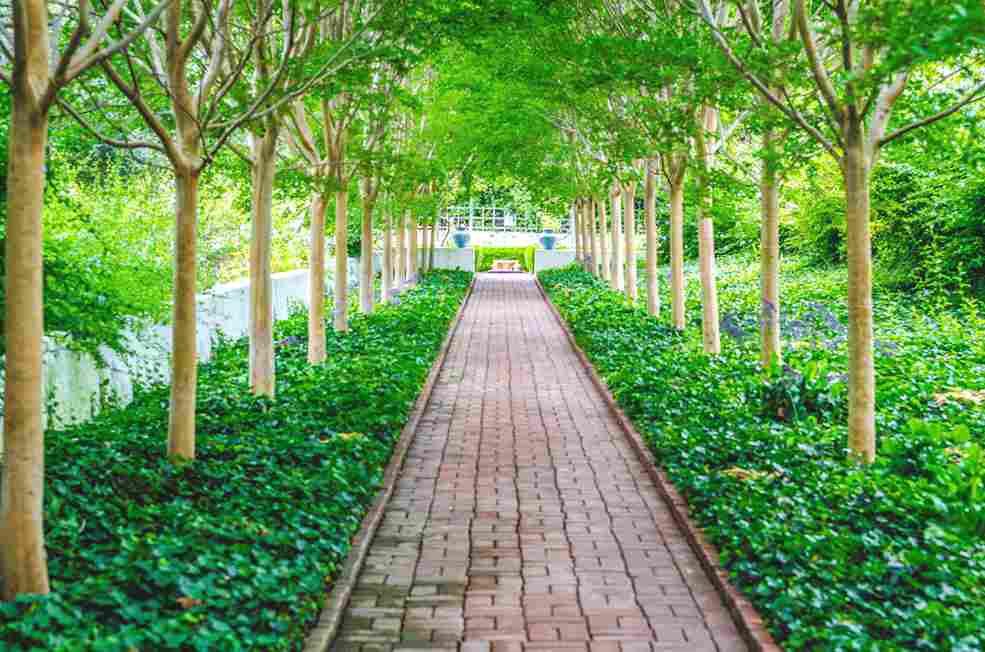
The stone you choose for a walkway does more than set the visual tone for your yard. In Ithaca, it determines whether that walkway still looks the same in five years or starts heaving, cracking, and shifting after the first two or three winters. The Finger Lakes freeze-thaw cycle is not kind to porous or poorly installed materials, and a choice that works fine in a milder climate can fail here within a single season.
Homeowners in Cayuga Heights and Forest Home ask about types of stone for walkways constantly, and the answer is almost never one-size-fits-all. The right material depends on your yard’s terrain, the walkway’s purpose, your soil drainage, and what kind of maintenance you are willing to commit to over time. This article covers the most common options, explains what each one does well and where it falls short, and gives you an honest picture of what professional installation actually looks like for each material in this region.
Key Takeaways
- The best types of stone for walkways in Ithaca are dense, low-absorption materials like bluestone, quartzite, and natural fieldstone that resist freeze-thaw cracking.
- Porous stones like certain limestones and soft sandstones absorb water, which leads to spalling and surface deterioration after repeated freeze-thaw cycles.
- Proper base preparation, typically a compacted gravel base of six to eight inches in this region, matters as much as material selection for long-term walkway performance.
- Installation costs for stone walkways in Ithaca generally run $18 to $35 per square foot depending on material, pattern complexity, and site conditions.
- Professional installation prevents the most common failure points, including inadequate base depth, improper pitch for drainage, and joint instability.
- Timing installation within Ithaca’s late April through mid-October window gives new walkways the best chance to settle and cure before the ground freezes.
Types of Stone for Walkways: An Overview for Ithaca Homeowners
Understanding the different types of stone for walkways starts with knowing what your local climate demands of the material. Ithaca sits in USDA Hardiness Zone 6a, and the Finger Lakes region experiences some of the most persistent freeze-thaw cycling in the Northeast. Water that seeps into a porous stone and then freezes expands, and it does that repeatedly across a single winter. Over time, that process breaks down stone from the inside out.
Beyond freeze-thaw resistance, stone choice affects drainage, traction, maintenance, and how the walkway integrates with the surrounding landscape. A formal bluestone path reads differently than a loose flagstone stepping-stone route through a garden bed, even if both serve the same basic function. Matching the material to the use and the context of the property is part of what separates a well-designed walkway from one that just happens to be there.
VP Designs Lawn & Landscape has installed stone walkways on residential properties across Ithaca and the surrounding areas in a wide range of styles and budgets. The company’s experience with local soil conditions, terrain grades, and winter performance is reflected in both material recommendations and installation methods. A walkway that looks good on day one but needs repairs by year three is not a success by any measure.
The sections below break down the most common material options, their performance in Ithaca’s conditions, and what to consider before committing to any of them. You can also explore the full range of professional hardscape and stonework services to get a sense of how these materials translate into finished installations.
Bluestone
Bluestone is the most reliable choice for formal stone walkways in the Ithaca area, and for good reason. It is a dense, low-porosity sandstone quarried in the Southern Tier of New York and nearby Pennsylvania, which means it is locally available, competitively priced relative to imported stone, and specifically proven in upstate New York winters. Its tight grain structure resists water absorption and holds up through repeated freeze-thaw cycles without spalling or surface deterioration.
Cut bluestone comes in uniform rectangles and squares, which makes it ideal for more structured, geometric walkway patterns. Irregular or thermal bluestone has a more natural edge and works well for informal paths, garden walkways, and transitional spaces between lawn and planting beds. Both perform equally well from a durability standpoint; the choice between them is mostly aesthetic.
Bluestone’s one consistent limitation is its surface texture when wet. The natural cleft surface provides good traction, but honed or smooth-cut bluestone can become slippery after rain or in shaded areas where moisture lingers. On north-facing walkways or heavily shaded routes, a textured finish is always the better call for safety.
Flagstone: Limestone, Quartzite, and Sandstone
The term “flagstone” describes any flat stone used in paving, so it covers several distinct materials that behave very differently in Ithaca’s climate. Understanding which type of flagstone you are actually buying matters more than most suppliers emphasize.
Quartzite is one of the best-performing flagstone options for cold climates. It is extremely dense, virtually nonporous, and holds its color and surface integrity well over time. It tends to cost more than other flagstone options, but it earns that price through longevity. Limestone is widely available and attractive, but its porosity varies significantly by source. Some limestone holds up reasonably well; other varieties absorb moisture readily and begin flaking within a few winters. If a contractor is proposing limestone for an Ithaca walkway, the specific density and absorption rating of that stone warrants a direct conversation.
Softer sandstones, particularly those sourced from warmer-climate regions, are the most problematic flagstone choice for this area. They absorb water easily, and the surface begins to degrade noticeably within two to four winters. The price point is appealing, but the replacement cost is not.
Natural Fieldstone and Cobblestone
Fieldstone walkways have a long history in Tompkins County, and for good reason. Rounded or rough fieldstone laid as stepping stones through a garden or along a less-trafficked path blends naturally into the regional character of older Ithaca properties. It is durable, handles the climate well when the base is prepared correctly, and does not require the precision cutting that formal stone does.
Cobblestone, which refers to smaller rounded stones set in a tightly jointed pattern, creates a more structured surface than loose fieldstone. It is labor-intensive to install correctly and requires a stable sand-set or mortar base to prevent individual stones from rocking underfoot. On steep grades, like those common on South Hill residential lots, cobblestone without proper base preparation becomes a safety issue, not just an aesthetic one.
The main limitation of fieldstone and cobblestone paths is uneven footing. They work well in garden settings and secondary paths, but they are rarely the right choice for a primary walkway connecting a driveway to a front entry, where a smooth, consistent surface is safer and more practical for everyday use.
Concrete Pavers
Manufactured concrete pavers offer a different value proposition than natural stone. They are consistent in size and thickness, which makes installation faster and slightly more predictable. They are also available in a wide range of colors and profiles, including formats that replicate the look of natural stone reasonably well at a lower material cost.
The performance gap between quality concrete pavers and natural stone has narrowed over the years, and premium pavers from reputable manufacturers handle freeze-thaw cycling better than lower-grade options. That said, the color in concrete pavers tends to fade over time, and they do not develop the natural patina that makes aged bluestone or fieldstone more attractive with each passing decade.
For homeowners weighing cost against longevity, concrete pavers offer a middle-ground option that outperforms soft sandstone while undercutting the price of premium natural stone. Working with a contractor who knows which paver products hold up in upstate New York winters is the key to making that option work well.
What Professional Installation Includes and Why It Matters
Knowing the types of stone for walkways is only part of the picture. How that stone is installed determines whether the walkway performs for ten years or starts failing after the second winter. The two most common professional vs. DIY failure points in this region are base depth and drainage pitch.
In Ithaca, a properly prepared walkway base requires six to eight inches of compacted gravel to account for frost depth and spring heave. Most DIY guides recommend four inches, which is adequate in moderate climates but not here. A base that is too shallow allows the stone to shift as the ground freezes and thaws, and once a walkway surface begins to rock and settle unevenly, the damage compounds every season.
Drainage pitch is the second critical factor. A walkway that does not direct water away from the foundation or toward a defined drainage path will pool water along its edges, saturate the base material over time, and accelerate the very freeze-thaw damage the stone itself was chosen to resist. Getting the pitch right requires reading the grade of the surrounding yard and planning accordingly, not just laying stone level and calling it done. You can explore how walkways integrate with broader professional landscape maintenance to keep the surrounding beds and drainage functioning well alongside new hardscape.
Cost and Timing for Stone Walkway Installation in Ithaca
Stone walkway installation in the Ithaca area typically runs $18 to $35 per square foot installed, with material choice, pattern complexity, and site conditions driving most of the variation. Bluestone and quartzite flagstone sit at the higher end of that range. Concrete pavers and simple fieldstone stepping-stone paths sit lower. A walkway that requires grading corrections, significant base excavation, or access through a tight side yard will also cost more than a straightforward open-grade installation.
Ithaca’s installation window runs from late April through mid-October. Spring scheduling fills up quickly, so homeowners planning a new walkway for the current season are better served by reaching out early to discuss project timelines rather than waiting until the ground is already workable. Fall installations are possible through September and into early October, but any walkway installed late in the season needs enough time to fully settle before the ground freezes. You can also review the complete range of outdoor services available to plan coordinated work across multiple areas of your property in a single season.
When you are ready to move forward with a stone walkway or want to talk through material options for your specific property, VP Designs Lawn & Landscape is available to help. The company serves Ithaca, New York and the surrounding areas with stone walkway installations built for the local climate, and every project starts with a clear material recommendation and honest estimate. Call (607) 592-5505 to get the conversation started.
Frequently Asked Questions About Types of Stone for Walkways
Q: What are the best types of stone for walkways in Ithaca’s climate?
A: Bluestone and quartzite flagstone are the top performers in the Finger Lakes region. Both are dense, low-porosity stones that resist the freeze-thaw cracking that damages more porous materials. Bluestone has the added advantage of being locally quarried in upstate New York, which keeps material costs relatively competitive for the quality level.
Q: Can I use limestone for a walkway in Ithaca?
A: It depends entirely on the specific stone. Some limestone has low enough porosity to perform adequately in cold climates. Others absorb water readily and begin to spall and flake within a few winters. Ask your contractor for the absorption rating on any limestone being proposed for your project. If that information is not available, the safer choice is bluestone or quartzite.
Q: How much do stone walkways cost to install in Ithaca?
A: Most stone walkway installations in the Ithaca area run $18 to $35 per square foot installed. Material choice is the biggest variable: premium natural stone like quartzite sits at the higher end, while concrete pavers and simpler fieldstone paths tend to cost less. Site conditions, including grading needs and access, also factor into the final number.
Q: What is the biggest mistake homeowners make when installing stone walkways themselves?
A: Inadequate base depth is the most common and most costly DIY error in this region. Most online guides call for a four-inch gravel base, but Ithaca’s frost depth and freeze-thaw cycle require six to eight inches of compacted gravel to prevent heaving and surface movement. A walkway built on a shallow base will begin to shift within one or two winters and will need to be pulled up and rebuilt from scratch.
Q: How long does a professionally installed stone walkway last in Ithaca?
A: A properly installed bluestone or quartzite walkway with an adequate base can last thirty or more years with minimal intervention. Concrete pavers installed correctly can last fifteen to twenty-five years before color fading or surface wear becomes noticeable. The base preparation matters as much as the material; a quality stone on a poor base will fail faster than a modest stone on a properly prepared one.
Q: Does the type of stone affect winter maintenance?
A: Yes. Some stone surfaces are more susceptible to damage from certain de-icing products than others. Bluestone and quartzite handle standard rock salt reasonably well, though minimizing chemical use is always better for the long-term surface. Concrete pavers and softer sandstones are more vulnerable to surface spalling from repeated salt exposure. Discussing winter care as part of your snow and ice management plan with your contractor is worth doing before the first winter.
Q: When is the best time of year to install a stone walkway in Ithaca?
A: Late April through early September gives the most flexibility. Spring installations have the full season to settle before winter, which is ideal. September and early October are workable, but scheduling gets tight and the window before the first hard freeze is shorter than most homeowners expect. Contacting a contractor in late winter or early spring puts you in the best position for a timely start.
Conclusion
Choosing among the types of stone for walkways comes down to understanding what your specific property needs, what Ithaca’s climate will put that material through, and what level of base preparation the installation requires. A well-matched material on a properly built base will serve your property for decades. A beautiful stone on a compromised base will start failing within seasons.
Working with a contractor who knows local stone sources, understands the frost depth requirements for this region, and has seen firsthand how different materials perform through Finger Lakes winters takes most of the guesswork out of that decision. The right walkway does not just connect two points on your property; it holds its line, its level, and its appearance through everything this climate delivers year after year.