Most residential landscaping ideas you find online were written for warmer, flatter, and more forgiving places than Ithaca. They assume long growing seasons, moderate winters, and soil that responds predictably to basic amendments. Properties here operate under different rules. The Finger Lakes freeze-thaw cycle, late spring frosts that can push into mid-May, and the clay-heavy soils common across Tompkins County all shape what is realistic on a residential lot, and what looks good in April in Charlotte does not always survive October in Ithaca.
The most effective residential landscaping ideas for this region start from the property’s actual conditions: its terrain, its drainage patterns, its sun and shade distribution, and the way it transitions through four distinct seasons. A backyard that floods every spring needs a different approach than one that bakes dry on a south-facing slope. A wooded lot in Forest Home has almost nothing in common with a flat, open lawn in Lansing near the Ithaca Mall area. Site-specific thinking is what separates landscape work that holds up from work that needs to be redone inside of five years.
This article covers the residential landscaping ideas best suited to Ithaca properties, organized by project type, so you can identify what your yard needs and understand what professional installation looks like for each category.
Key Takeaways
- The best residential landscaping ideas for Ithaca properties are built around site-specific conditions, including terrain, soil drainage, sun exposure, and climate demands.
- Native and Zone 6a-adapted plants outperform imported ornamentals in Ithaca’s clay soils and cold winters and require less intervention once established.
- Hardscape additions like patios, stone walkways, and retaining walls solve structural problems that planting alone cannot fix and add usable outdoor space.
- Drainage planning is the most overlooked element of residential landscaping in this region, and correcting it early prevents compounding problems in the beds, lawn, and foundation planting areas.
- Ithaca’s installation window runs from late April through mid-October, with spring preferred for planting and the full season workable for hardscape.
- Professional installation prevents the most expensive residential landscaping mistakes: wrong plant choices for site conditions, improper base preparation for hardscape, and drainage errors that worsen with every wet season.
Residential Landscaping Ideas: An Overview for Ithaca Homeowners
Good residential landscaping ideas address the full scope of a property, not just the pieces that are most visible from the street. A beautifully planted front bed that drains poorly against the foundation, a patio installed without adequate base preparation, or a backyard lawn that stays wet for weeks after snowmelt are problems that compound over time and cost significantly more to fix than to prevent. The best landscape plans account for how water moves across the property, how plants will look and perform in three to five years, and how each element holds up through Ithaca winters.
Residential landscaping falls into three broad categories that work together on most properties. Softscape includes all the living elements: lawn, plantings, groundcovers, and gardens. Hardscape covers structural surfaces and built elements: patios, walkways, walls, and edging. Site work addresses the underlying conditions that determine whether everything else succeeds: grading, drainage, and soil preparation. Skipping the site work phase is the most common reason well-intentioned landscape projects underperform.
VP Designs Lawn & Landscape works through all three categories on residential properties across Ithaca and the surrounding areas, approaching each project with a site assessment before making any material or plant recommendations. That sequencing matters because what looks like a planting problem is often a drainage problem, and what looks like a drainage problem is often a grading problem. Solving them in the right order produces results that hold. You can explore the full scope of professional residential landscape services to understand what a complete program includes.
The sections below cover the most practical and proven residential landscaping ideas for Ithaca properties, with guidance on plant selection, hardscape options, drainage solutions, and the cost and timing considerations that apply to each.
Planting Ideas: Choosing What Thrives in Ithaca
Plant selection is where residential landscaping ideas either succeed or fail over the long term. The Ithaca area sits in USDA Hardiness Zone 6a, and during a severe winter it can behave more like Zone 5b. Plants that are rated for Zone 6 but sit at the marginal edge of that rating, common in many garden center displays, are the ones that look fine for a season or two and then suffer significant dieback after the first cold snap that pushes below their tolerance. Replacing dead or damaged plantings costs more than buying the right species to begin with, and doing it repeatedly removes any cost advantage a cheaper plant offered at purchase.
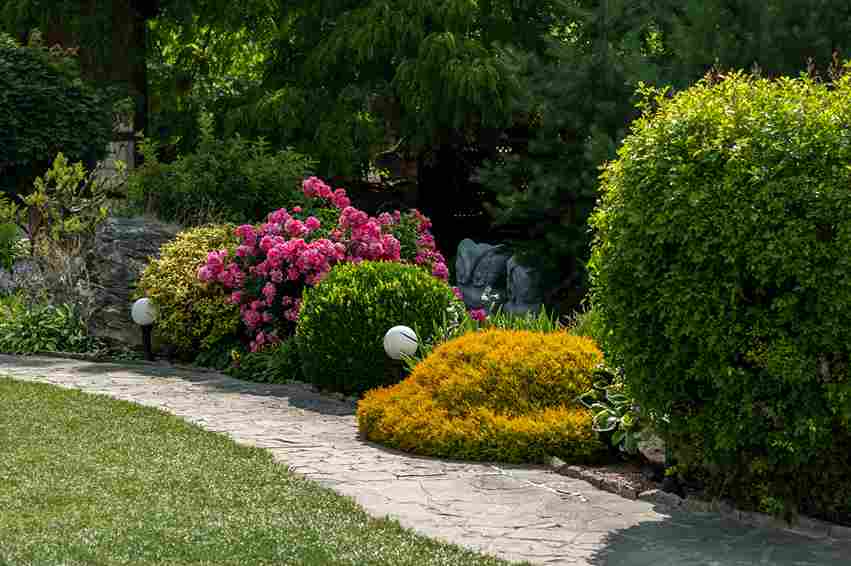
For shrub borders and foundation beds, reliable performers in Ithaca conditions include native inkberry holly, densiformis yew, Virginia sweetspire, and native spirea varieties. These hold their form through the season, return consistently in spring, and handle the clay soil moisture swings between wet spring and dry summer without requiring constant intervention. For flowering perennial beds, black-eyed Susan, native coneflower, wild columbine, and prairie dropseed all establish strong root systems in Tompkins County soil and expand reliably year over year without the replanting cycle that less hardy species require.
Ornamental grasses have become one of the more versatile elements in Ithaca residential landscapes over the past decade. Karl Foerster feather reed grass, switchgrass, and native little bluestem provide movement, seasonal color, and winter structure in areas where flowering perennials go dormant. They hold their form well into the cold months, which extends the visual interest of a bed beyond the first fall frost and provides something worth looking at through the bare months.
Backyard Landscaping Ideas: Patios, Gathering Spaces, and Lawn Areas
The backyard is where most residential landscaping investment in Ithaca ends up going, because it is where families spend the most time outdoors and where functional improvements make the biggest quality-of-life difference. A backyard that consists of an uneven lawn, no defined gathering area, and a slope that drains toward the house is a missed opportunity that a thoughtful landscape plan can change significantly.
Patio installation is one of the highest-return residential landscaping ideas for backyards in this region. A well-built stone patio creates a defined outdoor living area, solves the problem of a soggy or uneven lawn section near the house, and adds usable square footage to the property. Bluestone and natural flagstone are the most durable choices for Ithaca’s climate, handling the freeze-thaw cycling that shifts poorly prepared surfaces within a season or two. Patio installation typically runs $18 to $35 per square foot in the Ithaca area, with material, pattern complexity, and base requirements driving the variation within that range. Detailed guidance on hardscape and stonework installation covers what that process looks like from base preparation through finished surface.
For backyards where grass consistently fails to establish, whether from shade, foot traffic, heavy clay, or steep grade, groundcover plantings and alternative surfaces are worth serious consideration. Native wild ginger, pachysandra alternatives, and creeping phlox fill shaded areas where turf grass gives up. Artificial turf installation at $8 to $15 per square foot solves high-traffic or chronically bare areas without the ongoing reseeding cycle that never fully resolves the underlying problem.
Drainage and Grade: The Foundation of Every Landscape Plan
No list of residential landscaping ideas for Ithaca properties is complete without addressing drainage, because poor drainage undermines every other investment made in a yard. Clay-heavy soil drains slowly under the best conditions. When it sits on a flat lot, holds water from spring snowmelt, or receives runoff from an uphill neighbor, it creates saturated conditions that stress or kill plantings, prevent lawn establishment, and create foundation moisture issues that extend well beyond the yard itself.
French drains and surface grading corrections are the two most common interventions for residential drainage problems in Ithaca. A French drain, which is a perforated pipe buried in a gravel trench, captures subsurface water and redirects it to a lower point or a defined outlet away from the foundation and planting beds. Grading corrections reestablish positive slope away from the house where years of soil settlement or mulch buildup have reversed the natural drainage direction. Both are straightforward to install during a landscape renovation and nearly impossible to add cleanly after beds and plants are already in place.
Properties on steeper terrain, particularly in neighborhoods like West Hill or on the hillside lots that rise above East Ithaca, often need retaining walls as part of their drainage and grade solution. A well-placed retaining wall stops soil movement on a slope, creates a level planting tier, and manages where water flows across the property. Retaining wall installation runs $25 to $50 per square foot in this area, and it is one of the residential landscaping ideas that pays for itself in reduced erosion and improved plant establishment over the first several seasons.
Low-Maintenance Landscaping Ideas for Busy Homeowners
Not every homeowner wants a complex landscape that requires intensive seasonal care. A significant portion of residential landscaping ideas that perform well in Ithaca are explicitly low-maintenance, using plant selection and design choices that reduce the ongoing labor without sacrificing appearance or durability.
Mass plantings of a single tough species are one of the most effective low-maintenance strategies for Ithaca residential lots. A bed planted entirely with a reliable native groundcover, a single ornamental grass variety, or a consistent shrub species requires far less weeding, pruning management, and seasonal intervention than a mixed planting of a dozen different species each with their own requirements. The visual impact of a mass planting is also stronger and more intentional-looking than a scattered mix, which is a design benefit that comes at a lower maintenance cost.
Mulching beds correctly, with two to three inches of shredded hardwood applied in spring, reduces weed pressure, retains soil moisture through Ithaca’s dry summer stretches, and moderates the soil temperature swings that stress shallow-rooted plantings. The most common mulching mistake is over-application: six or eight inches of mulch piled against a foundation or around a shrub base creates the moisture and fungal conditions that damage roots and bark rather than protecting them. Correct application is a specific task, not just a quantity, and it is one of the details that ongoing residential landscape maintenance handles correctly on a consistent schedule.
Cost and Timing for Residential Landscaping in Ithaca
Residential landscaping costs in Ithaca span a wide range depending on scope. A planting refresh with new beds, clean edges, and fresh mulch typically runs $1,500 to $3,500 for a standard residential lot. A more comprehensive project involving grading corrections, new hardscape, and a full planting redesign can reach $8,000 to $15,000 or more. Ongoing maintenance contracts to keep an installation performing well through each season run $150 to $400 per month for most residential properties.
Ithaca’s installation season runs from late April through mid-October. Spring is the preferred time for planting because it gives new root systems the full growing season to establish before winter. Hardscape work can be completed through the full season, but any mortared elements need to cure before the first hard freeze, which typically arrives in late October in Tompkins County. For properties that need winter snow and ice management as well, coordinating that service alongside the landscape installation keeps the property covered from the last fall cleanup through the first spring thaw.
Spring schedules fill quickly in Ithaca. Contractors who do high-quality work book their seasons early, and homeowners who reach out in late winter secure better scheduling and more flexibility on start dates. Waiting until April to start the conversation usually means a late spring or early summer start at best for new installations, and for planting projects that means losing the most favorable establishment window. Getting a quote and confirming scope in February or March puts your project at the front of the season rather than waiting behind everyone who had the same idea in May.
When you are ready to move from ideas to an actual plan for your Ithaca property, VP Designs Lawn & Landscape is the local resource to call. The company serves Ithaca, New York and the surrounding areas with residential landscaping installations, maintenance programs, and site improvements built around the specific demands of the Finger Lakes climate. Call (607) 592-5505 to walk through your property and turn your residential landscaping ideas into a plan that holds up year after year.
Frequently Asked Questions About Residential Landscaping Ideas
Q: What are the best residential landscaping ideas for properties in Ithaca, NY?
A: The most reliable residential landscaping ideas for Ithaca start with site-specific planning: understanding drainage patterns, sun and shade distribution, soil type, and terrain before choosing any plants or materials. Native and Zone 6a-adapted plants for softscape, bluestone or natural flagstone for hardscape, and proper drainage corrections as a foundation all produce results that hold through Finger Lakes winters without constant intervention.
Q: How do I pick plants that survive Ithaca winters for my residential landscape?
A: Stay within confirmed Zone 6a performers and avoid species that are marginal at the edge of that rating. Reliable choices include native inkberry holly, densiformis yew, Virginia sweetspire, black-eyed Susan, native coneflower, and ornamental grasses like Karl Foerster and switchgrass. These species are proven in Tompkins County conditions and return consistently without the dieback and replacement cycle that marginal species require after a hard winter.
Q: What residential landscaping ideas work for a sloped or hilly backyard in Ithaca?
A: Retaining walls, terraced planting beds, and dense groundcover plantings on slopes are the most effective combination for hilly Ithaca backyards. A low retaining wall creates a level planting tier, stops soil erosion, and manages where water flows across the property. Mass plantings of deep-rooted groundcovers like creeping juniper or native prairie dropseed anchor slope soil between structural elements. Getting the drainage right before installing any plantings is critical on hillside lots.
Q: How much do residential landscaping ideas cost to implement in Ithaca?
A: Scope determines cost. A planting refresh with new beds and mulch typically runs $1,500 to $3,500 for a standard lot. A full property redesign with grading, hardscape, and comprehensive planting can reach $8,000 to $15,000 or more. Patio installation runs $18 to $35 per square foot, retaining walls $25 to $50 per square foot, and ongoing maintenance contracts $150 to $400 per month depending on what is included.
Q: When is the best time of year to start a residential landscaping project in Ithaca?
A: Late April through early June is the best window for planting projects, giving new installations the full growing season to establish roots before winter. Hardscape and grading work can begin earlier in spring and continue through mid-October. Reaching out to a contractor in February or March secures better scheduling for a spring start, which is when Ithaca crews book up fastest.
Q: What is the biggest mistake homeowners make with residential landscaping in Ithaca?
A: Skipping drainage and grade corrections before installing plants and hardscape. It is the most common and most expensive error in this region. Clay-heavy soil, slope runoff, and Ithaca’s heavy spring snowmelt create drainage problems that worsen every season if the underlying grade or soil conditions are not addressed first. Plantings installed in a poorly draining bed fail. Hardscape installed without drainage consideration shifts and heaves. Fixing those issues after the fact requires tearing out finished work, which costs significantly more than addressing them at the start of the project.
Q: Can I combine residential landscaping ideas with low-maintenance design in Ithaca?
A: Yes, and it is often the smarter approach for busy homeowners. Mass plantings of a single tough native species, correct mulch application, well-defined bed edges, and plant choices that do not require annual division or deadheading all reduce ongoing labor without sacrificing appearance. A landscape designed for low maintenance upfront stays looking intentional and cared-for with a fraction of the seasonal attention that a high-complexity design demands.
Conclusion
The residential landscaping ideas that perform best in Ithaca are not necessarily the most complex or the most ambitious. They are the ones built on honest site assessment, plant choices matched to actual Zone 6a conditions, hardscape installed with the base preparation this climate demands, and drainage corrections made before anything else goes in. Those fundamentals separate landscape work that holds up through a decade of Finger Lakes winters from work that starts showing problems within the first two seasons.
Whether you are starting with a blank slate, refreshing an existing yard, or solving a specific problem like a slope that erodes every spring or a backyard that stays wet until June, the right plan starts with understanding what the property actually needs. From there, the ideas that make sense become clear, and the investment in getting them done correctly pays off for years.