What Residential Lawn Care Actually Costs in the Ithaca Area
Residential lawn care cost is one of those topics where generic national averages do more harm than good. A number pulled from a national pricing article does not account for Ithaca’s clay-heavy soils, the steep grading challenges on South Hill and East Hill properties, or the compressed growing season that changes how many service visits actually make sense per year. If you are trying to budget for lawn care in the Finger Lakes, you need numbers that reflect what work here actually requires.
Homeowners in Cayuga Heights often find that their properties come with a combination of mature trees, root competition near the surface, and soil compaction that makes standard lawn care more involved than a flat suburban lot. Properties in Varna and Caroline deal with different challenges entirely, including acidic soil from heavy tree cover and drainage issues that affect how frequently and aggressively turf can be treated. None of that shows up in a national average.
This article breaks down residential lawn care cost by service type, explains what drives price variation in the Ithaca area, and helps you understand what you are actually paying for when you hire a professional.
Key Takeaways
- Residential lawn care cost in the Ithaca area varies by service type, property size, and soil conditions, with recurring maintenance contracts typically running $150 to $400 per month.
- One-time visits cost significantly more per visit than scheduled programs because contractors have to account for catch-up work on unmaintained turf.
- Ithaca’s clay-heavy soils and steep terrain on hillside properties add complexity that affects pricing compared to flat, well-drained lots.
- Core aeration and overseeding are among the highest-value services for Ithaca lawns and should be budgeted as annual fall expenses.
- Understanding what is included in a lawn care quote prevents surprises and helps you compare bids accurately across providers.
- Hiring a professional on a consistent schedule produces better turf quality at lower long-term cost than reactive or DIY approaches.
Residential Lawn Care Cost: What the Numbers Actually Mean
Residential lawn care cost covers a wide range of services, and the number on a quote means very little without knowing what is included. A low monthly rate that excludes aeration, overseeding, and seasonal cleanups is not the same value as a higher rate that bundles those services in. Understanding the components of a lawn care program is the first step to evaluating whether a quote is fair.
The core services in most residential programs are mowing, edging, and blowing. From there, programs expand to include fertilization, weed control, aeration, overseeding, spring and fall cleanups, and in some cases pest or grub treatments. Each of those adds cost, but each also adds meaningful value to the health and appearance of your turf over time.
VP Designs Lawn & Landscape works with Ithaca homeowners on programs that are scoped to what the property actually needs, not a one-size package. Soil condition, sun exposure, turf type, and slope all influence what a property requires and how frequently certain services need to happen. The pricing sections below reflect what those services cost in the Ithaca market as of 2026.
Comparing quotes without a clear scope of services is one of the most common ways homeowners end up with unexpected costs mid-season or disappointed results by fall.
Mowing and Basic Maintenance: What to Expect
Recurring Mowing Costs
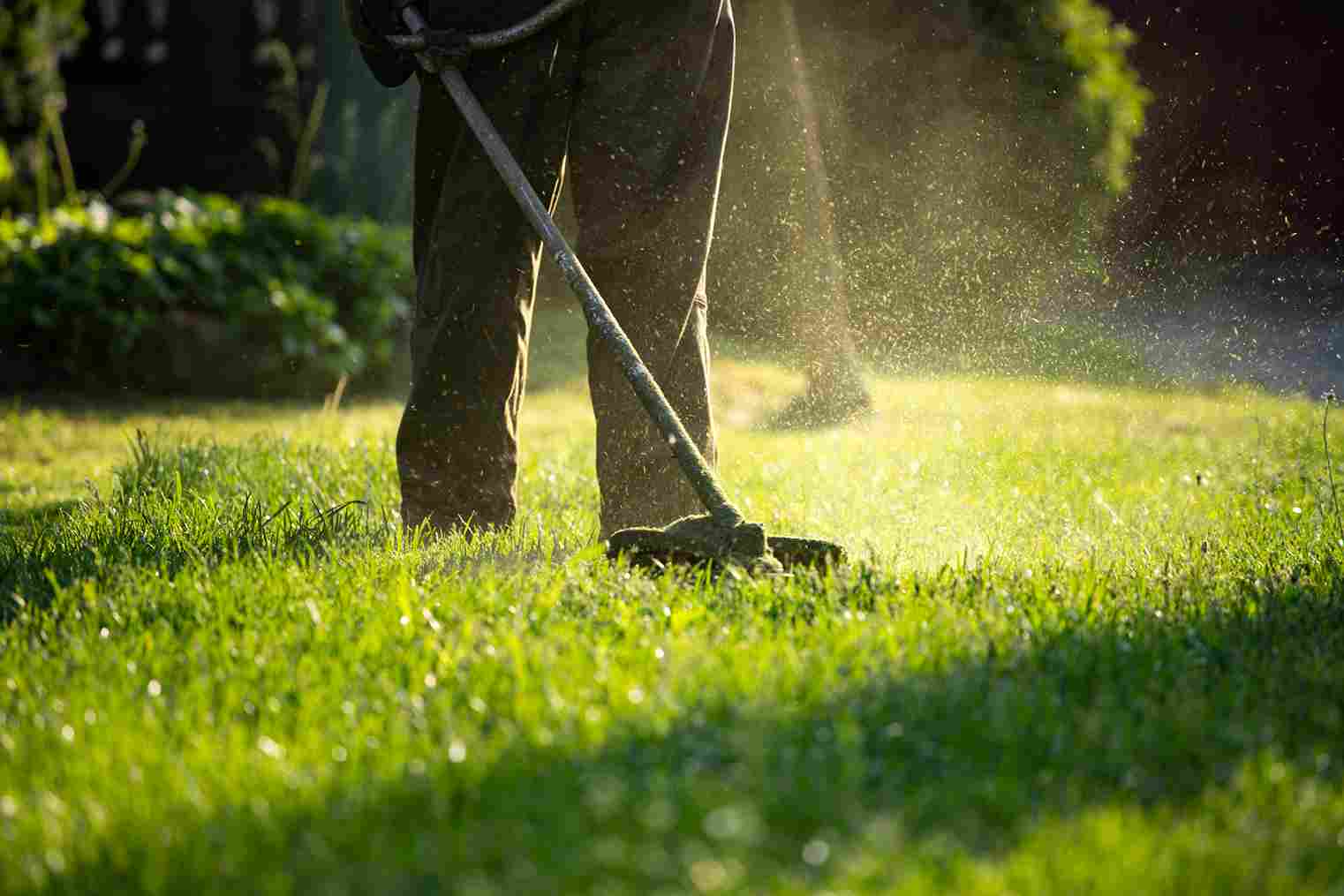
Mowing is the foundation of any residential lawn care program, and it is also the service with the widest price range depending on property size and complexity. For a standard residential lot in Ithaca, weekly or biweekly mowing typically runs between $40 and $85 per visit. Smaller in-town lots in neighborhoods like Collegetown or Belle Sherman tend to land at the lower end, while larger properties with irregular shapes, significant slope, or gated access run higher.
Biweekly mowing is common for Ithaca properties during shoulder seasons in spring and fall, when growth rates slow. During the peak growing window from late May through August, weekly mowing is the appropriate frequency for most cool-season turf. Letting grass get too tall between cuts stresses the turf and creates a thatching problem that shows up over time as the lawn thins out.
Edging and blowing are almost always included in a mowing visit from a professional crew, but confirm that when you receive a quote. Some providers quote mowing only and charge separately for edging along beds, driveways, and sidewalks. On a property with extensive hardscape borders, that difference in scope can add up meaningfully across a full season. You can see how mowing integrates with broader professional landscape maintenance programs that keep the full property in order.
Seasonal Cleanups
Spring and fall cleanups are typically quoted separately from recurring mowing programs, though some providers bundle one or both into annual contracts. Spring cleanup in Ithaca covers debris removal, cutting back ornamental grasses and perennials, edge refresh, and initial mulch work. Fall cleanup is primarily leaf removal, bed clearing, and preparing turf for winter.
Spring cleanup for an average residential property in Ithaca runs $200 to $500 depending on lot size, tree cover, and how much debris has accumulated over winter. Fall cleanup tends to run slightly higher because leaf volume in this region is significant, particularly on wooded lots in neighborhoods like Forest Home where leaf drop is heavy and extends over several weeks.
Scheduling cleanups as part of an annual contract rather than booking them as one-off jobs usually reduces the per-visit cost and guarantees your spot on the schedule before the season peak hits. Late callers for spring cleanup in Ithaca consistently wait longer or pay more because crew capacity fills up fast once the ground dries out in April.
Fertilization and Weed Control Programs
What a Full Fertility Program Costs
A standard fertilization and weed control program in the Ithaca area runs four to six applications per year, timed to match cool-season turf growth cycles and local frost dates. Annual cost for a full program on a typical residential lot ranges from $300 to $600, depending on lot size and whether broadleaf weed control, crabgrass pre-emergent, and grub treatment are included.
Ithaca’s clay-heavy soils hold nutrients differently than sandy or loamy soils, and fertilizer timing matters more here than in regions with better drainage. An application put down too early in a wet spring gets displaced by runoff before the turf can use it. An experienced local provider adjusts timing based on actual soil conditions rather than a fixed calendar schedule.
Soil testing is worth the modest upfront cost for any Ithaca property starting a new fertilization program. Wooded lots in areas like Danby and Newfield commonly have acidic soil pH that reduces fertilizer effectiveness until lime is applied to bring the pH up into the range where turf can absorb nutrients properly. Skipping that step and applying a standard program to acidic soil produces disappointing results and wastes money.
Weed Control Considerations
Weed pressure in Ithaca varies significantly by property type. Open, sunny lots in East Ithaca with well-drained soil see heavy crabgrass and broadleaf pressure through summer. Shaded, damp properties see different weed species, including ground ivy, creeping Charlie, and moss, that require different treatment approaches. A weed control program that is not calibrated to the specific weed species present on your property is less effective and costs more per square foot of actual control.
Pre-emergent crabgrass applications need to go down before soil temperatures reach 55 degrees Fahrenheit at a two-inch depth, which in Ithaca typically means a window in late April to early May. Missing that window means the crabgrass has already germinated and post-emergent treatment is required, which is more expensive and less reliable. Professional providers who are monitoring soil temps rather than following a generic date-based schedule consistently deliver better results.
Core Aeration and Overseeding: Annual Value Services
Core aeration and overseeding are among the highest-return services for residential lawns in Ithaca, and they are frequently underbudgeted. Aeration on a standard residential lot runs $100 to $200 depending on size. Overseeding adds $150 to $300 on top of that, depending on coverage rate and seed mix used.
Ithaca’s clay soils compact significantly over a single growing season, and without annual aeration, that compaction reduces water penetration, limits root depth, and gradually thins out turf density. A lawn that goes two or three years without aeration on clay soil will show it clearly: thin spots, increased weed invasion, and poor recovery from summer dry stretches. This is one of the maintenance steps that DIY schedules most commonly skip, and the consequences compound year over year.
The right window for aeration and overseeding in Ithaca is late August through mid-September. Soil temperatures are still warm enough for seed germination but air temperatures have dropped enough to reduce seedling stress. Doing this work in October reduces germination reliability, and seedlings that do come up often lack sufficient root development to survive their first winter in this climate. The full range of services available includes aeration and overseeding as part of fall maintenance programs.
Professional vs. DIY: Where the Real Cost Difference Lies
The upfront appeal of DIY lawn care is clear: equipment rental, seed, and fertilizer seem cheaper than a service contract. What that calculation misses is the cost of inconsistency, mistimed applications, and the cumulative expense of correcting problems that a professional would have prevented.
A common DIY failure point is fertilizer timing. Applying a spring fertilizer too early, before the turf has broken dormancy and soil temperatures support uptake, pushes weak top growth without building root structure. That top-heavy growth is more vulnerable to summer heat stress, and the lawn comes out of July looking worse than a properly fertilized one despite the same inputs. Timing matters as much as the product.
Weed pressure compounds quickly when missed. A homeowner who skips a pre-emergent application one spring because of a late scheduling decision often spends the following two seasons managing the crabgrass and broadleaf population that got established. Professional programs prevent that cycle rather than reacting to it. Properties with hardscape and stonework adjacent to turf areas also benefit from consistent edging and weed management that protects joint integrity along borders.
Equipment quality is another factor. A consumer-grade mower set at the wrong height, or a spreader that applies unevenly, produces results that look like what they are. Professional crews use calibrated equipment and know the correct mowing height for cool-season turf in this climate, typically between three and four inches, which helps the grass retain moisture and outcompete weeds through summer.
What Affects Your Specific Quote
Several property-specific factors push residential lawn care cost up or down from the ranges above. Understanding them helps you evaluate quotes accurately rather than just comparing bottom-line numbers.
Lot size and shape are the most straightforward factors. A half-acre rectangular lot is faster and cheaper to service than a half-acre with multiple obstacles, curved beds, steep slopes, and narrow gated access. Properties on East Hill and South Hill with significant grade changes require slower, more careful mowing and sometimes different equipment than flat lots, which affects labor cost.
Soil condition at the start of a program matters as well. A property that has been maintained consistently for several years requires less corrective work than one coming off years of neglect or inconsistent care. Initial soil amendment, heavy overseeding to fill in thin areas, and significant weed remediation all add front-loaded cost that tapers off once the turf is in good condition and being maintained on schedule.
The frequency and number of services in your program is the most direct cost driver. A mow-only biweekly program is the lowest entry point. A full-service annual contract including mowing, fertilization, weed control, aeration, overseeding, and spring and fall cleanup represents the upper range but also the highest return on the investment in turf quality over time. For properties that include artificial turf installation in some areas alongside natural grass, scoping the two correctly in one contract often produces better pricing than managing them separately.
When you are ready to get an accurate quote for your property, VP Designs Lawn & Landscape serves Ithaca, New York and the surrounding areas with residential lawn care programs built around what Finger Lakes properties actually need. Call us at (607) 592-5505 to schedule a site visit and get a scoped estimate that reflects your specific lot, soil, and goals. Understanding residential lawn care cost starts with a conversation about your property, and we make that easy.
Frequently Asked Questions About Residential Lawn Care Cost
Q: What does residential lawn care cost per month in the Ithaca area?
A: Most residential lawn care contracts in Ithaca run between $150 and $400 per month depending on lot size, service scope, and visit frequency. That range covers mowing, edging, and standard seasonal maintenance. Programs that include fertilization, weed control, aeration, and cleanup services sit at the higher end of the range and deliver proportionally more turf improvement over the season.
Q: Why is lawn care more expensive on hillside properties in Ithaca?
A: Properties on South Hill, East Hill, and West Hill require slower mowing, more careful equipment operation, and sometimes specialized tools that flat lots do not. Slope also affects drainage, soil compaction patterns, and erosion risk, all of which add complexity to maintenance and fertilization programs. A site visit is the only accurate way to scope a hillside property because the variables differ significantly from one lot to the next.
Q: Is it worth paying for a full fertilization program, or can I handle that myself?
A: Professional fertilization programs deliver better results in Ithaca primarily because of timing precision and local soil knowledge. Ithaca’s clay soils and common acidic pH in wooded areas require calibrated application timing and sometimes soil amendment before standard fertilizer programs work effectively. Misapplied or mistimed fertilizer wastes money and can produce results worse than no treatment at all.
Q: How much does core aeration cost for a residential lawn in Ithaca?
A: Core aeration on a standard residential lot in the Ithaca area typically runs $100 to $200, with overseeding adding another $150 to $300 depending on coverage and seed mix. These services together represent some of the best value in a lawn care program for Ithaca properties because clay soil compaction is a persistent annual problem that directly affects turf density and health.
Q: When should I book a lawn care provider in Ithaca to get on the spring schedule?
A: Contact providers in January or February for spring scheduling. Ithaca lawn care contractors fill their recurring client schedules before they take on new work, and calling in April when you want service starting immediately usually means waiting several weeks or taking whoever has last-minute availability. Getting on a provider’s schedule in winter locks in your spot before the season opens.
Q: Does a one-time lawn cleanup cost more than a scheduled service visit?
A: Yes, consistently. One-time visits require contractors to account for catch-up work, travel scheduling inefficiencies, and the labor involved in bringing an unmaintained lawn up to baseline. A property on a regular schedule is faster to service each visit and produces better results. The per-visit cost of a scheduled program is almost always lower than the equivalent one-time service rate, and the cumulative turf quality improvement makes the comparison even more favorable.
Q: How do I know if a lawn care quote in Ithaca is fair?
A: Compare quotes at the scope level, not just the price. Ask each provider exactly what services are included, how many visits per season, whether cleanups are bundled or extra, and what the aeration and overseeding schedule looks like. A lower quote that excludes several services is not a better deal. A site visit from the provider before quoting is a strong indicator that the number reflects your actual property rather than a generic estimate.
Conclusion
Residential lawn care cost in the Ithaca area reflects the specific demands of Finger Lakes properties: compacted clay soils, steep terrain on hillside lots, a compressed growing season, and the cumulative effect of freeze-thaw cycles on turf health year over year. National averages and generic pricing tools do not capture any of that, which is why site-specific quotes from local providers are the only reliable way to budget accurately.
The clearest takeaway from the numbers above is that consistent, scheduled professional care costs less over time than reactive or DIY approaches. The compounding value of properly timed fertilization, annual aeration, and regular weed control shows up clearly in turf quality after two or three seasons, and the cost of correcting neglected lawns almost always exceeds what consistent maintenance would have cost.
The right program for your property depends on what you have, what condition it is in, and what you want it to look like. A conversation with a local professional is the fastest way to get from a general range to an accurate number you can actually plan around.