
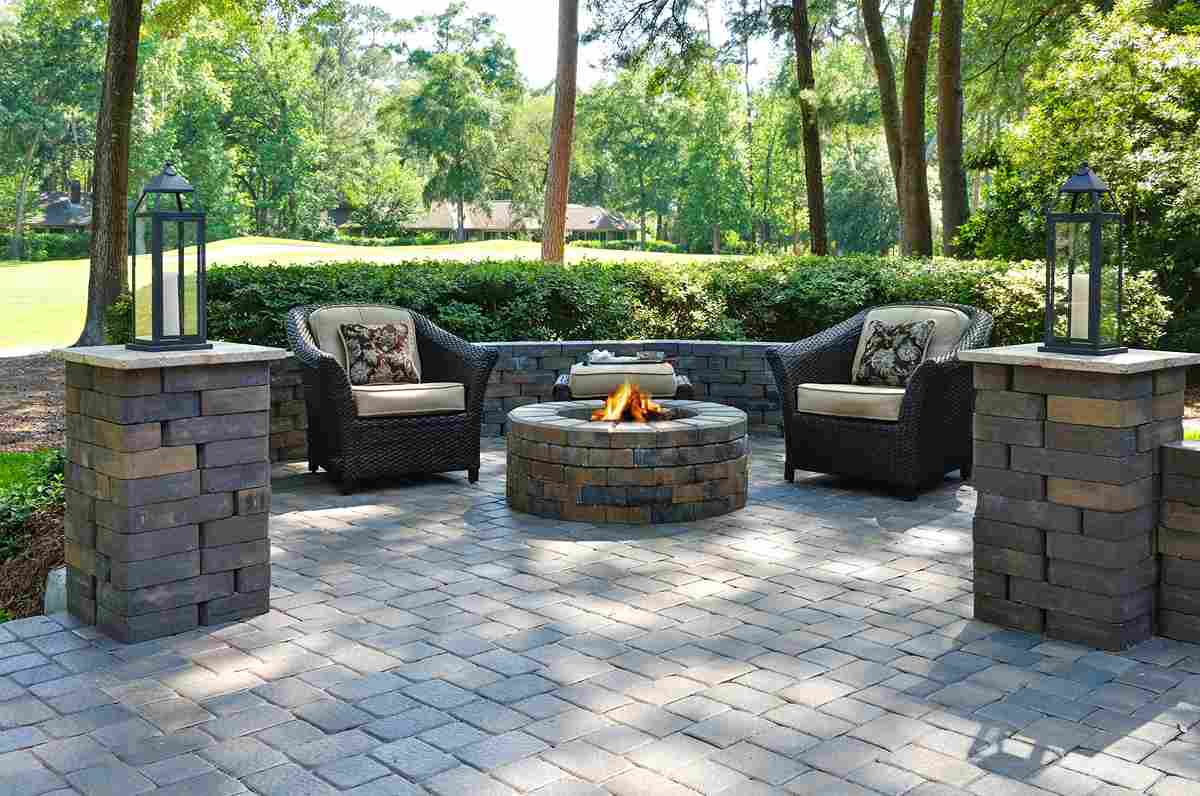
What a Stone Patio Actually Costs in the Finger Lakes
Homeowners researching how much stone patio cost in the Ithaca area quickly discover that national pricing articles are not particularly useful. The ranges they find online reflect averages pulled from markets with very different soil conditions, frost depths, and labor costs than what applies here in the Finger Lakes. A patio quoted at $15 per square foot in a warmer southern market requires a fundamentally different base construction than one built to survive Ithaca winters, and that difference shows up directly in the installed price.
Properties in Cayuga Heights frequently deal with mature tree root systems that complicate excavation and require modified base approaches. On West Hill, significant grade changes between a home’s rear door and the usable yard area often mean retaining walls, integrated steps, or substantial grading work become part of what starts as a patio project. In neighborhoods like Forest Home and Cornell Heights, older homes with established landscaping sometimes present access challenges that affect how equipment gets in and how long the job takes. All of those variables push a Finger Lakes patio cost away from any national average.
This article breaks down how much stone patio cost by material type, project complexity, and the site-specific factors that shape real quotes in the Ithaca market, so you can budget accurately and evaluate contractor proposals with confidence.
Key Takeaways
- Stone patio installation in the Ithaca area runs $18 to $35 per square foot installed, with premium materials and complex sites pushing costs above that range.
- Base construction is the single most important investment in a patio project, and shortcuts there produce frost heaving and surface failure within two to three Finger Lakes winters.
- Material choice between concrete pavers, natural flagstone, bluestone, and tumbled stone affects both upfront cost and the long-term maintenance the surface requires.
- Integrated features like retaining walls, built-in seating, steps, and drainage systems add meaningful cost but are often necessary on Ithaca’s hillside properties.
- The professional installation advantage is most visible in this climate after the first few winters, when properly built patios hold their level and drainage while DIY installations begin showing movement.
- Late April through October is the reliable installation window in Ithaca, with fall installations through mid-October often offering better contractor availability than the spring rush.
How Much Stone Patio Cost: Understanding the Full Scope
Understanding how much stone patio cost requires separating the stone surface from everything underneath it. The material on top is what you see every day, but the excavated base, compacted gravel layers, bedding material, drainage design, and edging restraints determine how that surface performs through decades of Finger Lakes freeze-thaw cycles. A patio quote that focuses only on the surface material is leaving out the most consequential part of the investment.
In the Ithaca area, installed stone patio pricing runs from $18 per square foot for straightforward concrete paver installations on flat, accessible lots to $35 per square foot and above for premium natural stone on complex sites with grade changes, drainage requirements, or difficult access. That range assumes proper base construction appropriate for this climate, meaning a minimum six-inch compacted gravel base, correct drainage slope, and edging restraints that hold the installation together through seasonal ground movement.
VP Designs Lawn & Landscape approaches every patio project in Ithaca with base preparation as the foundation of the work. The surface appearance is what homeowners are drawn to in photos and showrooms, but the base construction is what we are most focused on during installation, because that is what the Finger Lakes climate tests every single winter. The sections below break down what moves a project within that range and what each cost component represents.
Receiving a quote significantly below this range should prompt questions about base depth and compaction method, because that is almost always where the difference lies between a low bid and a properly built one.
Material Options and Their Cost Ranges
Concrete Pavers
Concrete pavers are the most consistently priced material option for stone patios in Ithaca and represent strong value for homeowners who want a durable, low-maintenance surface at the lower end of the installed price range. Standard residential paver installations run $18 to $24 per square foot installed, with cost variation driven primarily by paver profile, pattern complexity, and site conditions rather than the material itself.
The practical advantages of pavers in the Finger Lakes climate are significant. Their uniform thickness makes base preparation more predictable than working with irregular natural stone, and individual pavers that shift or crack from frost activity can be lifted and reset without disturbing the surrounding surface. On a patio that will be used for twenty-five or more years, that repairability is a real long-term value that is easy to underestimate at the time of installation.
Pattern complexity affects labor cost more than most homeowners expect. A standard running bond or grid pattern installs faster than a herringbone, basketweave, or mixed-size pattern that requires more cuts and fitting time. On a 400 square foot patio, the difference between a simple pattern and a complex one can add $500 to $1,000 in labor. Paver color blending, border courses in contrasting materials, and soldier course edging also add labor cost that should be discussed and included in the quote scope. Paver patios connect naturally to broader hardscape and stonework projects when walls, steps, or walkways are part of the same scope.
Natural Flagstone
Natural flagstone installations sit in the $25 to $35 per square foot range installed and require more skilled labor than uniform paver work. Irregular flagstone is fitted and cut on site to create a tight, stable surface, and the fitting process is time-intensive work that cannot be rushed without producing a surface that looks and performs poorly. The labor premium over pavers is real and justified by the skill level required.
Flagstone performs well in Ithaca’s climate when set on a proper base, but it is less forgiving of base shortcuts than concrete pavers. The variation in stone thickness across irregular pieces means the bedding layer has to compensate for that variation, and an installer who does not take the time to set each piece at the correct elevation produces a surface with trip hazards and drainage irregularities that are difficult to correct after the fact. Properly set flagstone on a well-prepared base is one of the most visually appealing and durable patio surfaces available, and it adds strong curb appeal to Ithaca properties.
Locally sourced fieldstone and Pennsylvania bluestone are both used regularly in Finger Lakes installations. Fieldstone has a raw, naturalistic character that suits informal garden-style patios, while cut bluestone has a refined appearance that reads well on more formal properties. Pricing varies by availability and sourcing distance, and a local contractor will know which suppliers are currently stocking material and what lead times look like for each option.
Bluestone Cut to Pattern
Bluestone cut to a dimensional pattern, either a regular ashlar or a mixed-size pattern with consistent joints, represents the premium end of the stone patio cost range in Ithaca. Installed pricing for cut bluestone runs $30 to $45 per square foot depending on pattern complexity, stone thickness, and site conditions. That premium reflects both the material cost and the precision installation work required to set cut stone to consistent joint widths and elevations.
Bluestone is a regionally appropriate material with a long history in the Finger Lakes, and a well-installed bluestone patio on an Ithaca property has a quality and character that ages gracefully over decades. The investment is meaningful, and it is most appropriate for primary entertaining spaces, front entry areas where curb impact is significant, or properties where the homeowner places high value on natural stone aesthetics.
Bluestone requires sealing on a regular cycle, typically every two to three years, to maintain its appearance and reduce moisture absorption that can accelerate surface spalling in freeze-thaw conditions. That maintenance cost should be factored into the long-term ownership calculation alongside the higher installation price.
What Drives Your Specific Project Cost
Site Conditions and Terrain
Site conditions are the most variable cost factor in any Ithaca patio project and the primary reason that per-square-foot ranges are starting points rather than final numbers. A flat, accessible rear yard with no obstacles is the baseline condition that produces the most straightforward installation cost. Every complication adds labor time, equipment requirements, or material volume that moves the number upward.
Grade changes between the home and the proposed patio area are among the most common cost drivers on Ithaca properties. South Hill and East Hill properties frequently have rear yards that drop away from the house, requiring either a raised patio with retaining wall support, a stepped-down installation, or significant fill and grading work to create a level usable surface. Retaining walls integrated into a patio project run $25 to $50 per square foot of wall face, and a modest three-foot retaining wall along one side of a patio adds cost quickly when priced correctly for materials and labor.
Access limitations affect labor cost in ways that are easy to overlook. Properties in older Ithaca neighborhoods where the rear yard is accessible only through a gate or along a narrow side passage require material to be wheelbarrowed rather than delivered by machine, which significantly increases the labor hours per square foot of installation. A site assessment before quoting is the only way to identify these conditions accurately. Proper grading and drainage planning for a new patio also ties directly into professional landscape maintenance for the surrounding beds and lawn areas, and coordinating those scopes together often reduces overall project cost.
Base Construction Requirements
Base construction is where the most significant quality differences between contractors show up, and it is the component most likely to be reduced in a low bid. A proper base for an Ithaca patio involves excavating to the correct depth, installing and compacting crushed aggregate in lifts, grading the base surface to the correct drainage slope, and applying a bedding layer appropriate for the chosen surface material. Each of those steps requires time, equipment, and technique that cannot be shortcut without consequences.
The minimum standard for residential patio base construction in this climate is a six-inch compacted aggregate base. Properties with clay subsoil, poor natural drainage, or significant tree root activity often warrant eight inches or more, and adding a geotextile separation fabric between the subgrade and aggregate prevents clay migration into the base layer over time. That migration is gradual but consistent, and without fabric separation it reduces base drainage capacity and creates soft spots in the surface within five to ten years.
Drainage slope is the detail that separates good base work from great base work. A patio surface needs to drain away from the house at a minimum slope of one percent, meaning one inch of fall per eight feet of run. Getting that slope consistent across the full patio area, and maintaining it while setting stone to the correct elevation, requires a level and experience reading grades across an area as installation progresses. Installers who rush this step produce patios that pond water near the house, which is both a nuisance and a long-term foundation concern.
Integrated Features and Their Costs
Many Ithaca patio projects include features beyond the flat surface itself, and those additions represent meaningful portions of the total project budget. Understanding the cost of each component helps homeowners prioritize when budget requires tradeoffs between features.
Steps integrated into a patio installation run $150 to $300 per step depending on material, width, and construction method. A rear entry with a three-foot grade change typically requires three to four steps, adding $450 to $1,200 to the base patio cost. Built-in seating walls add $40 to $75 per linear foot and provide both functional seating and visual definition to the patio space. Fire pit pads or outdoor kitchen foundations are flat hardscape elements that add square footage to the project at the standard per-square-foot rate.
Drainage systems add cost but are necessary on certain sites. A French drain or channel drain integrated into the patio design to capture runoff that would otherwise sheet across the surface or accumulate in a low corner runs $15 to $25 per linear foot installed. On a property where the patio sits downslope from a lawn area or where a downspout discharges near the patio border, a drainage system is not optional if the installation is going to perform correctly. Connecting a patio drainage system to the broader yard drainage plan, including any relationship to snow and ice management in winter, is part of a complete site approach.
Professional vs. DIY: The Finger Lakes Reality
DIY patio installation is one of the more commonly attempted hardscape projects, and it is also one of the projects where the gap between professional and homeowner results is most visible in Ithaca’s climate. The surface materials are available at supply yards, tutorial videos make the process look approachable, and the potential savings are real on paper. The problem is that the base construction steps that determine long-term performance in a freeze-thaw climate require equipment, technique, and experience that most homeowners do not have.
The most consistent DIY failure point is base compaction. Consumer-grade plate compactors and hand tamping do not achieve the density that commercial equipment produces, and an under-compacted base settles unevenly through its first winter. In Ithaca’s climate, that uneven settlement is accelerated by freeze-thaw cycles that expand and contract the subgrade repeatedly from November through March. By year two or three, the surface shows low spots, drainage problems, and joint widening that trace directly back to inadequate compaction at installation.
Drainage slope is the second most common DIY error. Setting patio stone to a consistent drainage slope across a large area requires a builder’s level or laser level and regular checking as each course goes down. Most homeowners work by eye or with a basic bubble level, which produces a surface that looks flat but holds water in low spots that were not visible during installation. Water that pools on a patio surface in Ithaca freezes and expands in joints and beneath the stone, accelerating surface degradation and producing the kind of frost heaving that requires full removal and reinstallation to correct. DIY attempts that cut base depth to save on material cost produce results that require professional correction sooner than a proper installation would have cost in the first place. Any adjacent artificial turf installation areas also benefit from coordinated drainage planning with the patio, which a single professional installation manages as an integrated scope.
Jointing compound and edge restraint installation are two additional steps where DIY installations most commonly show early failure. Polymeric sand jointing requires proper tamping, moisture activation, and curing conditions that are easy to mismanage, and failed jointing allows weed germination and joint erosion that degrades the surface appearance within one season.
Seasonal Timing for Patio Installation in Ithaca
The installation window for stone patios in Ithaca runs from late April through mid-October, with late spring and early fall representing the strongest periods for new installation work. Ground conditions need to be stable and reasonably dry before excavation begins, which typically means waiting until late April even in a mild spring year. Starting on wet, saturated clay soil creates base compaction problems that are difficult to correct after the surface is installed.
Late May through June is often the most productive installation window for Ithaca patio projects. Ground conditions are typically stable, the full season lies ahead for the installation to settle before freeze-thaw activity begins, and contractor schedules, while busy, have not yet hit the midsummer peak. A patio installed in late May has four to five months before the first hard freeze, which gives the base time to fully consolidate and the jointing compound time to cure through several rain and dry cycles.
Fall installation through early October is a strong option that many homeowners do not consider because they associate patio projects with spring. September and early October often offer better contractor availability than May, and a fall installation still has six to eight weeks of settling time before the first hard freeze. The cutoff in Ithaca is roughly mid-October, after which ground temperatures and frost risk make reliable base compaction increasingly difficult to execute consistently.
Planning the project in winter and scheduling a contractor in January or February for spring work is the most reliable way to get on a quality contractor’s calendar before their season fills up. Calling in April wanting a Memorial Day patio consistently results in either waiting until June or accepting a contractor whose schedule has openings because others did not book them.
When you are ready to move from a range to a real number for your patio project, VP Designs Lawn & Landscape provides site-specific estimates for Ithaca, New York and the surrounding areas with no obligation. Call us at (607) 592-5505 to schedule a site visit and walk through material options, scope, and accurate pricing for how much stone patio cost on your specific property. A patio built correctly for this climate is a twenty-five year investment, and getting the base right from day one is the decision that determines everything that follows.
Frequently Asked Questions About How Much Stone Patio Cost
Q: How much does a stone patio cost per square foot in Ithaca?
A: Stone patio installation in the Ithaca area runs $18 to $35 per square foot installed, depending on material choice and site complexity. Concrete pavers on a flat, accessible lot land toward the lower end of that range. Premium bluestone or irregular flagstone on a sloped property with integrated steps and retaining elements runs higher. Any quote significantly below $18 per square foot for a fully installed patio in this climate warrants questions about base construction.
Q: Why does a stone patio cost more in Ithaca than national averages suggest?
A: Ithaca’s freeze-thaw climate requires a deeper, more carefully constructed base than warmer markets, which adds both material and labor cost. Clay-heavy soils across most of the Ithaca area require more aggressive base preparation than well-drained soils, and steep terrain on hillside properties frequently requires grading, retaining walls, or step integration that flat suburban lots do not. National averages are heavily influenced by lower-cost markets that do not face these conditions.
Q: What is the most durable patio material for Ithaca winters?
A: Concrete pavers and properly installed bluestone both perform well in Ithaca’s freeze-thaw conditions when set on an adequate base. Pavers have the practical advantage of individual replaceability if a section is affected by frost activity. Bluestone offers stronger aesthetic appeal and holds up well with proper installation and periodic sealing. In both cases, base construction quality is more important to long-term durability than material choice.
Q: How long does a professionally installed stone patio last in the Finger Lakes?
A: A properly built stone patio in Ithaca should last twenty-five years or more with standard maintenance. The base is the longevity factor: correct depth, proper compaction, and adequate drainage slope handle Finger Lakes freeze-thaw cycles without significant surface movement. Patios that show early frost heaving or joint failure almost always trace back to base construction shortcuts rather than material quality or surface wear.
Q: When is the best time to install a patio in Ithaca?
A: Late May through June and again from mid-September through early October are the two strongest windows. Spring installation allows the full season for base consolidation before freeze-thaw cycles begin. Fall installation through early October often offers better contractor availability and still provides adequate settling time before the first hard freeze. Mid-October is the practical cutoff in Ithaca, after which ground temperatures make reliable base compaction difficult.
Q: Do I need a retaining wall with my patio if my yard slopes?
A: It depends on the degree of slope and how far the patio extends from the house. Moderate slopes can sometimes be addressed with grading and a raised patio edge without a full retaining wall. Steeper grades, particularly those common on South Hill and West Hill properties, typically require retaining wall support to create a level usable surface and prevent soil movement beneath and around the patio edges. A site assessment is the only accurate way to determine what your specific grade requires.
Q: What questions should I ask a contractor before accepting a stone patio quote?
A: Ask specifically about base depth and compaction method, drainage slope specification, whether edging restraints and jointing material are included, how steps and grading are handled if your site has grade changes, and what the timeline and payment schedule looks like. Any contractor unwilling to specify base construction details is a flag worth noting. Also confirm whether permit requirements have been assessed for your specific project and property location.
Conclusion
Understanding how much stone patio cost in Ithaca means looking past the surface material to the full scope of what a properly built installation requires in this climate. Base depth, compaction quality, drainage design, and site-specific grading needs all shape the real cost of a patio that performs correctly through decades of Finger Lakes winters. National averages and online calculators miss all of those variables, which is why site-specific quotes from local contractors are the only reliable basis for budgeting.
The $18 to $35 per square foot range reflects what quality installations actually cost in this market. Projects that come in significantly below that range almost always involve base construction shortcuts that produce frost damage, surface movement, and drainage problems within a few seasons. The cost of correcting a poorly built patio almost always exceeds what proper installation would have required in the first place.
A site visit with a qualified local contractor is the right starting point for any patio project. That conversation surfaces the site-specific conditions that shape both the design and the budget, and it moves you from a general range to a number you can actually plan around before any work begins.