
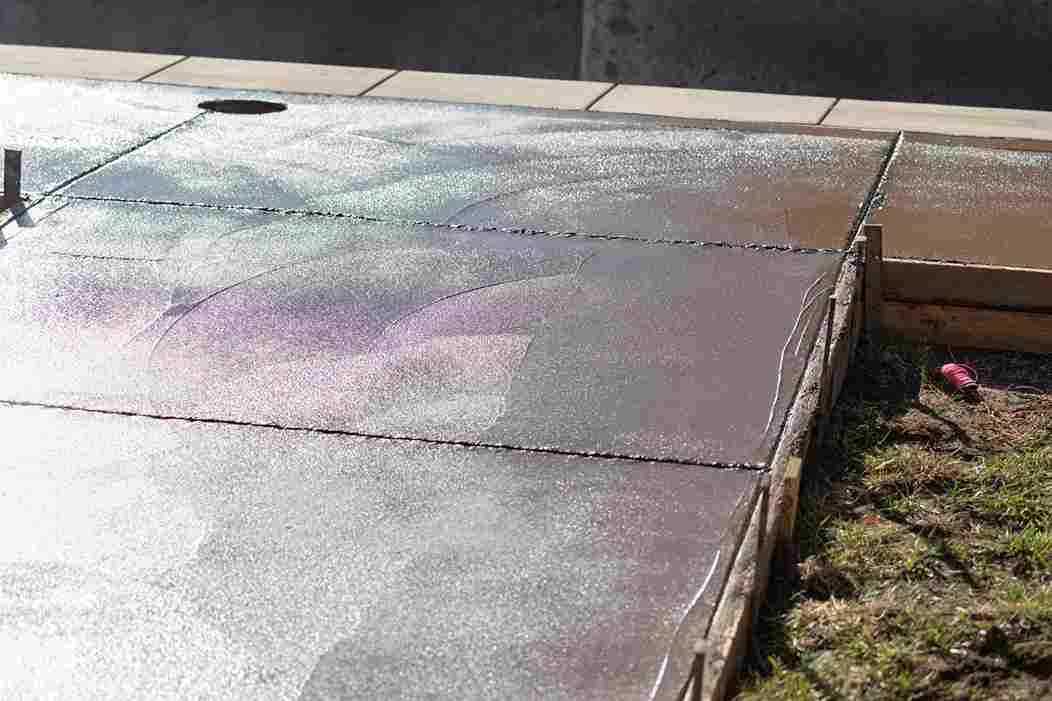
Calculating Patio Slabs for an Ithaca Property Takes More Than Basic Math
The calculation for how many patio slabs you need looks simple on paper: measure the area, divide by the slab size, order that many. In practice, that approach reliably produces a shortage, a surplus of the wrong size, or both. On an Ithaca property, where natural flagstone slabs vary in thickness and dimension, where terrain irregularities require more cuts than a flat suburban lot, and where material reorders mid-project can delay completion by weeks, getting the quantity right before ordering matters more than most homeowners expect.
Properties throughout East Hill and Collegetown present the kind of conditions that expose the limits of a simple area calculation. Mature tree roots that dictate layout adjustments, grade changes that require step transitions, and bed edges that interrupt a clean rectangular footprint all increase the number of cuts and the volume of waste material in a project. This article walks through the five steps that produce an accurate slab quantity estimate for an Ithaca patio, including the waste factors and local material considerations that generic calculators don’t account for.
Key Takeaways
- Calculating how many patio slabs you need accurately requires five distinct steps, not just a simple area division.
- Waste allowance for natural flagstone projects in Ithaca should run 15 to 20 percent above net area, with irregular layouts and hillside properties pushing toward the higher end.
- Concrete paver projects on straightforward sites typically require a 10 percent waste allowance, rising to 15 percent for diagonal or complex patterns.
- Slab size inconsistency in natural flagstone requires ordering by square footage rather than unit count, because no two slabs cover exactly the same area.
- Ithaca’s compressed installation season means mid-project material reorders can delay completion significantly, making accurate upfront ordering more important here than in markets with longer working windows.
- Professional installation eliminates quantity estimation risk because experienced contractors calculate material requirements as part of project planning, accounting for site-specific waste factors from the start.
How Many Patio Slabs Do I Need: Why the Answer Requires Five Steps
Figuring out how many patio slabs you need is a question that sounds like it has a straightforward answer until you’re standing on the actual site with a tape measure. The net square footage of a patio footprint is only the starting point. Waste from cuts, slab size variation, pattern complexity, and site irregularities all add to the quantity you need to order, and each factor compounds the others.
VP Designs Lawn & Landscape calculates material quantities as part of every hardscape and stonework project assessment, factoring in the site-specific conditions that affect waste volume before a single order is placed. That process protects against mid-project shortages that delay completion and against over-ordering that inflates project cost unnecessarily. For homeowners planning a DIY patio or trying to develop a realistic material budget before contractor conversations, the five steps below produce a quantity estimate that reflects what the project actually requires.
The steps are presented in sequence because each one builds on the result of the one before it. Skipping a step or rearranging the order produces an estimate that looks plausible but misses variables that show up as real problems during installation.
Step 1: Measure the Patio Footprint Accurately
Accurate measurement is the foundation the entire estimate rests on, and it’s the step most commonly rushed or approximated. A measurement error of six inches on a twenty-foot dimension adds or removes roughly ten square feet from the project area, which translates to a meaningful material quantity difference, particularly for larger slabs.
Measure the length and width of the patio footprint at the widest points, then calculate gross square footage by multiplying those dimensions. For rectangular patios, that calculation is straightforward. For L-shaped, curved, or irregular footprints, break the area into rectangles and calculate each section separately, then add them together. Trying to estimate an irregular shape as a single average dimension produces inaccurate results.
Account for any fixed obstacles within the patio footprint at this stage. A mature tree with a root zone that will be worked around, a drain cover that stays in place, or a planting bed island within the patio area all reduce the net coverage area. Subtract those obstacle areas from the gross square footage to get the net installation area.
Grade changes within the patio footprint also affect measurement. A patio that steps down across a slope, which is common on South Hill and West Hill properties where flat building area is limited, has a larger actual surface area than a flat measurement of the same footprint suggests. Measure each level separately and add the step riser area if the steps are being covered with matching slab material.
Ithaca properties with mature trees, particularly in Belle Sherman and Cayuga Heights where canopy coverage is dense and root systems extend well beyond drip lines, frequently require layout adjustments during installation that weren’t fully visible at measurement time. Building a small buffer into the measured area, roughly five percent, accounts for those field adjustments without inflating the estimate significantly.
Step 2: Choose Your Slab Type and Understand Size Variation
The type of slab material you’re working with determines how you calculate quantity from square footage, and the two most common options in Ithaca, natural flagstone and concrete pavers, require different approaches.
Concrete pavers come in fixed, consistent dimensions. A paver labeled 4×8 inches is exactly 4×8 inches across the entire order. That consistency means you can calculate unit count directly from square footage with high reliability. Divide the net installation area in square feet by the coverage area of a single paver in square feet, then apply the appropriate waste factor. For a standard 4×8 paver covering 0.222 square feet per unit, a 200 square foot patio requires roughly 900 pavers before waste allowance.
Natural flagstone is ordered by the ton or by the square foot coverage, not by unit count, because slab dimensions and thickness vary within every order. A pallet of bluestone flagging might contain slabs ranging from eight inches across to thirty inches across, all with varying thicknesses. Trying to estimate how many individual slabs you need is not a useful calculation for natural stone. The correct approach is to order by square footage coverage, at the density your chosen stone type yields per ton, then apply the waste factor for your layout complexity.
Slab thickness variation in natural flagstone also affects how material behaves during installation. Thicker slabs require more bedding layer adjustment to achieve a level surface, and very thin sections of irregular slabs are more vulnerable to cracking during cutting. Experienced installers select and orient slabs during installation to place thicker material where load concentrates and thinner material in lower-traffic zones. That selective use increases waste relative to a uniform material.
For homeowners in the planning stage, requesting a coverage estimate from the supplier based on your specific stone selection is more reliable than calculating from general density figures. Local suppliers familiar with Ithaca-area projects can advise on typical coverage rates for the stone products they carry.
Step 3: Apply the Correct Waste Factor for Your Project
Waste factor is the variable that most commonly causes material shortages on DIY patio projects, and it’s the number that varies most significantly based on site conditions and layout complexity. Applying a single standard waste percentage to every project produces accurate results on simple jobs and significant shortages on complex ones.
For concrete pavers on a straightforward rectangular patio with cuts only at the perimeter, a ten percent waste allowance is generally sufficient. That means ordering 1.10 times your calculated unit count. A 200 square foot patio requiring 900 pavers before waste needs approximately 990 pavers on order.
For concrete pavers installed in a diagonal or herringbone pattern, waste increases because perimeter cuts are angled rather than straight, and angled cuts produce more unusable material per cut stone. A fifteen percent waste factor is more appropriate for these patterns, and complex multi-pattern designs can push to eighteen or twenty percent on irregularly shaped footprints.
For natural flagstone, waste factors run higher across the board because the material itself is irregular. A standard rectangular flagstone patio with straight edges requires a minimum fifteen percent waste allowance. Irregular or free-form layouts, which are common with flagstone because the organic edge treatment suits the material, require eighteen to twenty percent. Ithaca properties with curved bed edges, angled transitions, or step integrations push toward twenty-five percent waste on the stone coverage estimate.
Hillside properties with significant grade changes add another layer to waste calculation. Steps cut into a slope require stone to be sized and fitted around riser and tread dimensions that don’t always align cleanly with the slab sizes available in a given order. That fitting process generates cut waste at a higher rate than flat patio work. Projects on East Hill or West Hill slopes that incorporate integrated steps should add five percent to whatever base waste factor applies to the flat patio area.
The practical consequence of getting waste factor wrong in Ithaca is more significant than in some markets because of the compressed installation season. A material shortage discovered in late August means waiting for a reorder that may not arrive until the installation window is nearly closed. Ordering accurately upfront is not just a budget question; it’s a schedule question in the Finger Lakes region.
Step 4: Account for Cuts Around Obstacles and Edges
Every cut made during installation produces waste. The cut piece going into the patio and the offcut that doesn’t. On a simple rectangular patio with no obstacles, cuts happen only at the perimeter and waste is predictable. On a typical Ithaca residential property, the obstacle count is rarely that low.
Edge cuts along curved or irregular perimeters generate more waste than straight edge cuts because each curved cut is unique and the offcut typically can’t be used elsewhere in the layout. If your patio has a curved edge that follows a planting bed or lawn line, calculate the linear footage of that curved edge and add an additional five percent to your waste factor beyond what the pattern complexity already requires.
Obstacle cuts around fixed features within the patio footprint, including drain covers, existing footings, tree root zones worked around rather than over, and utility access points, each generate waste proportional to how irregular the required cut shape is. A straight cut to clear a rectangular drain cover wastes less than an angled cut around a tree root exposure. Count the number of obstacles requiring cuts and add one to two percent to the waste factor for each one on projects with more than two or three such features.
Transitions to existing hardscape, such as where a new patio meets an existing walkway, concrete step, or driveway edge, require precise fitting that often produces more waste than open-field installation. The existing edge is rarely perfectly straight or at an angle that aligns conveniently with paver or slab dimensions. Budget additional waste for every linear foot of transition edge where new material must be cut to fit an existing condition.
For properties where a new patio connects to an existing hardscape and stonework installation, accurate transition measurement is part of the quantity calculation that affects both material order and installation time. This is an area where professional experience in fitting new work to existing conditions pays off in reduced waste and a cleaner finished result.
Step 5: Finalize the Order Quantity and Plan for Overage Storage
Once net area, slab type, waste factor, and cut adjustments are combined into a final quantity, the last step is deciding how much additional overage to carry in the order and how to handle any surplus material after installation.
Ordering exactly to the calculated quantity with no buffer is the highest-risk approach, particularly for natural flagstone where the material delivered may run slightly under the coverage estimate due to thickness variation. A five percent buffer beyond the calculated waste-adjusted quantity is a reasonable hedge against material variability, supplier measurement inconsistency, and the occasional installation mistake that damages a slab.
For concrete pavers, ordering a small surplus serves a long-term maintenance purpose beyond the installation itself. Concrete pavers can be damaged individually over years of use, and replacement pavers ordered years after the original installation may not match exactly in color due to batch variation and weathering differences. Storing ten to twenty extra pavers from the original order gives you matching replacement material if individual units need to be swapped out in the future. This is particularly relevant in Ithaca where freeze-thaw stress occasionally damages individual pavers that would otherwise require a partial reorder.
Planning storage for surplus material before the order arrives is a practical step that projects with site constraints, such as compact urban lots in Collegetown or properties with limited flat staging area, need to address in advance. Flagstone pallets are heavy and require stable ground to stage without sinking. Knowing where surplus material will be stored, and whether it can be returned to the supplier if unused, should be settled before the final order quantity is confirmed.
Connecting your material planning with a broader professional landscape maintenance schedule ensures that the lawn and bed areas disturbed during patio installation are restored and maintained in a way that integrates cleanly with the finished hardscape. For areas adjacent to the new patio where turf has difficulty establishing due to shade or foot traffic concentration, artificial turf installation is worth considering as part of the same project scope rather than as an afterthought.
If the material and quantity planning process for your patio project has raised questions about what professional installation would cost and handle differently, reviewing the complete services overview gives context for how a full-service contractor approaches the project from site assessment through material ordering and installation.
Whether you’re building a material budget for a conversation with a contractor or planning a project yourself, VP Designs Lawn & Landscape serves homeowners throughout Ithaca, New York and the surrounding areas and can provide site-specific guidance on how many patio slabs you need for your specific property and layout. Call (607) 592-5505 or visit the contact page to schedule a site assessment and get a quantity estimate grounded in actual site conditions.
Frequently Asked Questions About How Many Patio Slabs Do I Need
Q: How do I calculate how many patio slabs I need for a basic rectangular patio?
A: Measure the length and width of the patio footprint in feet and multiply to get gross square footage. Subtract any obstacle areas within the footprint to get net installation area. Divide net area by the coverage area of your chosen slab or paver unit, then multiply by your waste factor. For a simple rectangular concrete paver patio, a ten percent waste factor is appropriate. For natural flagstone, use fifteen to twenty percent minimum.
Q: How much extra should I order for waste on a flagstone patio in Ithaca?
A: A minimum of fifteen percent for straightforward rectangular layouts, and eighteen to twenty-five percent for irregular, curved, or stepped installations. Ithaca properties with significant grade changes, obstacle cuts, or curved bed edge transitions push toward the higher end of that range. Given the compressed installation season in the Finger Lakes region, ordering too little and waiting for a reorder creates schedule problems that ordering accurately upfront avoids entirely.
Q: Can I use an online paver calculator to estimate my material needs?
A: Online calculators are useful for converting square footage to unit counts once you know your waste factor, but they don’t account for site-specific variables like obstacle density, edge complexity, or grade changes. They also don’t adjust waste factors for Ithaca’s conditions, where hillside properties and irregular layouts are common. Use a calculator as a starting point, then apply the site-specific adjustments covered in this article before placing an order.
Q: Does slab size affect how many I need to order?
A: For concrete pavers with consistent dimensions, larger pavers cover more area per unit, so you need fewer units for the same square footage. For natural flagstone, ordering by unit count is not the right approach because slab sizes vary within every order. Order flagstone by square footage coverage at the density your specific stone type yields, then apply waste factor on top of that square footage number rather than a unit count.
Q: What happens if I run short on patio slabs mid-project in Ithaca?
A: For concrete pavers, a reorder from the same batch may produce units with slight color variation that becomes more visible as both old and new material weather over time. For natural flagstone, matching stone from a reorder to what’s already installed is difficult because stone coloring and character vary between quarry pulls. In Ithaca specifically, a late-season shortage can delay project completion past the installation window entirely, pushing the unfinished section to the following spring.
Q: Should I save extra patio slabs after the project is complete?
A: Yes, particularly for concrete pavers. Storing ten to twenty extra units from the original order gives you matching replacement material if individual pavers are damaged by freeze-thaw stress or impact over the years. Replacement pavers ordered well after the original installation often show color differences due to batch variation and weathering. In Ithaca’s climate, where freeze-thaw cycling occasionally cracks individual pavers, having on-hand replacements from the original order is practical long-term planning.
Q: Is a professional contractor better at estimating patio slab quantities than a homeowner?
A: Consistently, yes. Experienced contractors have installed enough projects to recognize the site conditions that drive waste higher, estimate cut counts accurately from a site walkthrough, and account for material variability specific to the stone products they regularly work with. Quantity estimation errors on professional projects are rare because the experience base that informs the estimate is deep. For homeowners, the five-step process in this article produces a reliable estimate, but it requires careful measurement and honest waste factor application to match what a professional assessment would produce.
Conclusion
Calculating how many patio slabs you need accurately is not a single calculation. It’s a five-step process that starts with precise measurement, moves through material type selection and waste factor application, accounts for site-specific cut requirements, and finishes with a final order quantity that protects against shortage without over-ordering unnecessarily. Each step matters, and each one reflects conditions that are more variable on Ithaca properties than generic guides account for.
Getting the quantity right before the order goes in is particularly important in the Finger Lakes region, where the installation season is short and material reorders mid-project create schedule complications that simpler markets don’t face. The extra time spent on an accurate estimate upfront is always worth less than the time and cost of managing a shortage or a mismatch once installation is underway.