
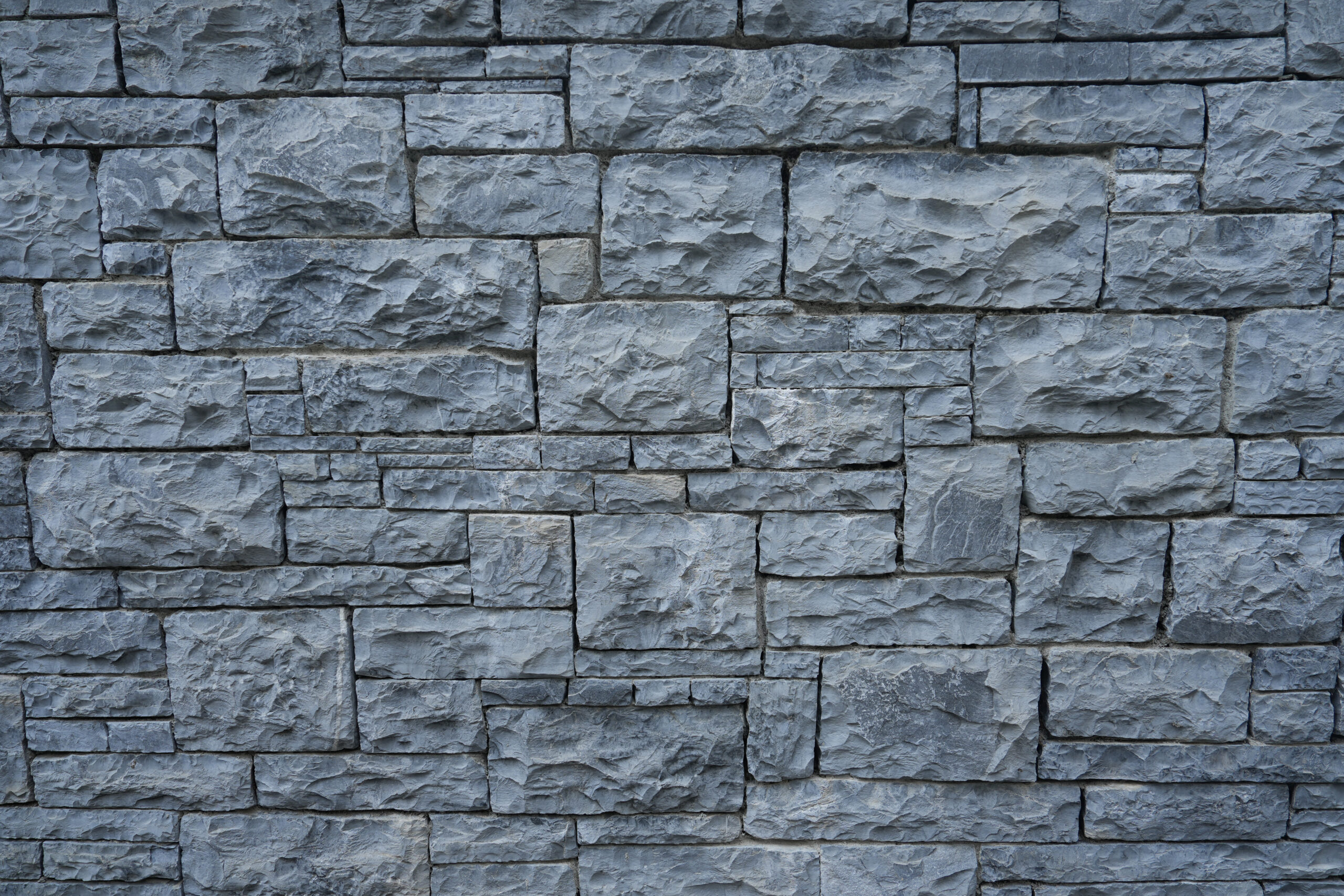
That Rust Stain on Your Stone Wall Probably Isn’t What You Think
Homeowners in Fall Creek and Belle Sherman who notice orange or reddish streaking on a stone wall often assume the worst: that the wall is breaking down, that moisture has gotten into the structure, that years of Ithaca freeze-thaw cycling have finally caught up with it. In most cases, that assumption is wrong. Rust staining and structural stone wall decay are two different phenomena that happen to show up looking similar to an untrained eye, and confusing one for the other leads to either unnecessary panic or, in some cases, ignoring an actual problem because it was dismissed as “just rust.”
This article separates what rust staining on a stone wall actually means from what genuine structural decay looks like, why Ithaca conditions affect both, and how to tell the difference on your own property before deciding whether you need a repair, a cleaning, or nothing at all.
Key Takeaways
- Rust staining on stone walls is almost always caused by naturally occurring iron content in the stone or nearby metal hardware reacting with moisture, not by structural decay.
- True structural decay in a stone wall shows up as different signs entirely: bulging, separation, leaning, or stones working loose from the wall face.
- Ithaca’s freeze-thaw cycles and clay-heavy soils contribute to real structural wall problems, but those problems are unrelated to rust coloring in nearly all cases.
- Iron-bearing stone types common in some Finger Lakes quarry sources naturally develop surface rust staining over time as a cosmetic mineral process.
- Rust staining can be addressed with cleaning and sealing, while structural decay requires an entirely different repair approach involving rebuilding or stabilizing the wall.
- A professional assessment is the only reliable way to determine whether staining on your specific wall is purely cosmetic or accompanied by an underlying structural issue.
Understanding Stone Wall Decay and Rust Staining: Two Separate Issues
Rust staining and structural stone wall decay are frequently confused because they can appear at the same time on an aging wall, but they have different causes and different implications. Rust staining is a surface-level cosmetic discoloration caused by oxidizing iron, either within the stone itself or from nearby metal components. Structural decay refers to the actual breakdown of the wall’s ability to hold its shape and function, caused by factors like inadequate drainage, frost heaving, or base failure.
VP Designs Lawn & Landscape evaluates stone walls throughout Ithaca by examining these two issues separately, since the appropriate response to each is completely different. A wall with rust staining and no structural issues needs cleaning, and possibly a discussion about sealing to slow future staining. A wall with structural decay, regardless of whether staining is present, needs an entirely different kind of attention that falls under hardscape and stonework repair or rebuilding.
The confusion between these two issues is common enough that homeowners sometimes invest in cosmetic cleaning for a wall that actually has a structural problem, or become unnecessarily concerned about a wall that’s structurally sound but has simply developed natural mineral staining over years of weathering. Understanding the distinction helps you ask the right questions and get the right kind of help.
What Actually Causes Rust Staining on Stone Walls
Rust staining develops through oxidation, the same chemical process that turns exposed iron and steel orange and flaky over time. On a stone wall, that process has a few distinct sources, and identifying which one applies to your wall affects what, if anything, you should do about it.
Iron content within the stone itself is the most common source of rust staining on natural stone walls in the Finger Lakes region. Many stone types quarried in this region, including some sandstone and certain limestone varieties, contain mineral deposits with naturally occurring iron. When that iron is exposed to moisture and oxygen over time, it oxidizes and produces the characteristic orange-to-reddish-brown staining that bleeds across the stone surface. This process is entirely natural and has no bearing on the structural integrity of the stone.
Metal hardware embedded in or near the wall is another common source. Older stone walls sometimes incorporate iron rebar, ties, or anchors as part of original construction, particularly in mortared walls built decades ago using techniques that predate modern stainless or galvanized hardware standards. As that embedded metal rusts, the staining migrates outward through the stone or mortar, appearing on the visible surface even though the rust originates from a component you can’t see.
Adjacent metal sources account for staining that has nothing to do with the wall’s construction at all. Iron fencing, old metal stakes, drainage pipe fittings, or even rusting outdoor furniture positioned near a wall can deposit rust-laden water runoff that stains the stone surface below or beside it. This type of staining is purely external and tells you nothing about the wall itself.
Groundwater with high mineral content moving through or behind a wall can also deposit iron staining as it surfaces and evaporates. This is more common on walls built into a hillside, such as those found throughout East Hill and South Hill properties, where groundwater movement through soil layers picks up mineral content before reaching the wall face.
What Genuine Structural Decay Looks Like, and Why It’s Unrelated to Rust
Structural decay in a stone wall is a fundamentally different problem from rust staining, with different causes and very different consequences if left unaddressed. Understanding what real decay looks like helps you recognize when a wall needs attention beyond a simple cleaning.
Bulging or leaning sections are among the clearest signs of structural trouble. A wall that’s beginning to bow outward, particularly in the middle of a long run or near the base, is showing signs that internal pressure, whether from soil load, water saturation, or inadequate original construction, is exceeding what the wall can resist. This kind of movement tends to progress over time rather than stabilizing on its own.
Stones working loose or falling from the wall face indicate that the original construction technique, whether mortared or dry-laid, is failing at the connection points between individual stones. In dry-laid walls, some settling and minor movement is normal over decades, but stones that are visibly displaced or have fallen away from their original position suggest the wall’s structural integrity has been compromised.
Visible gaps or separation between wall sections, particularly where a wall meets a corner, a step, or a different construction phase, often indicate differential settling. Ithaca’s clay-heavy soils are particularly prone to this kind of uneven movement, since clay expands and contracts with moisture content changes more dramatically than sandier soils. A gap that’s widening over successive seasons is a sign of an ongoing problem rather than a one-time settling event.
Drainage failure behind the wall is frequently the underlying cause of genuine structural decay, even when the visible symptom looks like something else entirely. Hydrostatic pressure from poorly drained soil pushes against a wall continuously, and over years of freeze-thaw cycling in Ithaca’s climate, that pressure works joints loose, displaces stones, and eventually causes visible failure. None of this process involves rust or iron oxidation in any way; it’s purely a function of water pressure and frost mechanics.
The critical point is that none of these structural decay indicators are connected to rust staining. A wall can show severe rust staining and have no structural issues whatsoever, and a wall can be structurally failing with no rust staining present at all. Treating rust color as a proxy for structural health leads to incorrect conclusions in either direction.
How to Tell the Difference on Your Own Wall
Before calling a professional, a basic visual assessment can help you understand which category your wall’s issue falls into, though a definitive answer for anything beyond simple cosmetic staining benefits from an expert evaluation.
Examine whether the staining is flat or associated with movement. Rust staining sits on the surface of the stone as discoloration; it doesn’t change the stone’s position or the wall’s shape. If you run your hand across a stained area, the stone surface should feel stable and intact, not loose or crumbling. If the staining is accompanied by stones that wiggle, shift, or feel loose to the touch, you’re likely looking at a structural issue that happens to also have staining present.
Check for a consistent pattern versus a localized concentration. Staining caused by iron content within the stone itself tends to appear somewhat consistently across multiple stones of the same type throughout the wall, since it reflects a mineral characteristic of the material. Staining concentrated in one specific area, particularly near a corner, a low point, or a spot where you can identify a nearby metal source, points toward an external or localized cause rather than a material-wide characteristic.
Look at the wall’s overall geometry. Step back and look at the wall as a whole structure rather than focusing on the stained area. Is the wall straight and plumb, or does any section appear to bow, lean, or have shifted out of alignment? Geometric problems indicate structural concerns regardless of whether staining is present anywhere on the wall.
Consider the wall’s age and history. A wall that has shown the same staining pattern for years without any change in appearance, movement, or new stains developing is more likely dealing with a stable, ongoing mineral process. A wall where staining has appeared recently alongside other changes, like new gaps, sounds different when tapped, or visible settling, deserves a closer look at what else might be happening structurally.
If you’ve gone through this assessment and remain uncertain, particularly on walls in Cayuga Heights or other neighborhoods where mature trees and significant grade changes complicate the picture, a professional evaluation removes the guesswork. Catching a genuine structural problem early, before it progresses to visible bulging or stone loss, generally means a smaller and less expensive repair.
Addressing Rust Staining: What Actually Works
If your assessment points toward cosmetic rust staining rather than structural decay, the good news is that this issue has manageable solutions that don’t involve rebuilding anything.
Cleaning with appropriate products removes surface rust staining in most cases. Specialized rust-removal cleaners formulated for use on natural stone, rather than generic household rust removers, are important here because some products that work on rust elsewhere can damage or discolor certain stone types. Testing any cleaning product on a small, inconspicuous section first is a reasonable precaution before treating the full stained area.
Identifying and removing the staining source, where possible, prevents the problem from simply returning after cleaning. If staining comes from a rusting metal stake, an old fence post, or hardware embedded near the wall, addressing that source stops new staining from developing even if some residual color from the original event proves difficult to fully remove.
Sealing the stone after cleaning can slow future staining, particularly on stone with naturally high iron content where some recurring discoloration may be unavoidable over time. Sealants reduce moisture penetration into the stone surface, which slows the oxidation process that produces visible staining, though it generally doesn’t eliminate the underlying mineral characteristic entirely.
Accepting some staining as a characteristic of the material is sometimes the most practical approach, particularly for stone types where iron content is a known characteristic rather than an anomaly. Some homeowners come to view minor rust staining as part of the stone’s natural character rather than a flaw to be eliminated entirely, especially on walls with an informal, rustic aesthetic where uniform color was never the goal.
When Rust Staining and Structural Issues Happen Together
In some cases, a wall can have both rust staining and a genuine structural problem, and recognizing this combination matters because addressing only the cosmetic issue leaves the real problem unresolved.
Rusting embedded hardware in older mortared walls can be both a staining source and, in advanced cases, a structural concern. As iron ties, rebar, or anchors corrode over years of moisture exposure, they don’t just stain the surrounding stone; they also lose structural strength and can expand slightly as they rust, which sometimes contributes to cracking in surrounding mortar. This is more relevant to older mortared stone construction than to dry-laid walls, which typically don’t rely on embedded metal connections.
Drainage problems that cause both issues simultaneously occur when groundwater carrying mineral content also generates enough hydrostatic pressure to stress the wall structurally. In this scenario, the rust staining is essentially a visible symptom of the same water movement that’s also contributing to structural stress, even though the staining itself isn’t causing the structural problem. Properties with poor drainage throughout the Ithaca area, particularly on properties built into hillsides, are more likely to experience this overlap.
A professional assessment that examines both the staining pattern and the wall’s structural condition is the only reliable way to determine whether you’re dealing with a purely cosmetic issue, a purely structural one, or a situation where both are present and interconnected. Attempting to diagnose this distinction without experience risks either overreacting to a cosmetic issue or underreacting to a structural one.
If a structural problem is identified, addressing it typically falls under broader hardscape and stonework repair, which may involve rebuilding affected sections, correcting drainage, or in significant cases, replacing the wall entirely. For ongoing landscape areas surrounding walls that need maintenance attention regardless of the wall’s condition, professional landscape maintenance keeps the surrounding grade and plantings in good order.
If you’ve noticed rust staining, structural changes, or simply want a professional opinion on a stone wall on your property, VP Designs Lawn & Landscape serves homeowners throughout Ithaca, New York and the surrounding areas. Call (607) 592-5505 or visit the contact page to schedule an assessment and get a clear answer on what’s actually happening with your wall.
Frequently Asked Questions About Stone Wall Decay and Rust Staining
Q: Does rust staining mean my stone wall is decaying structurally?
A: In nearly all cases, no. Rust staining is a cosmetic mineral process caused by iron content in the stone or nearby metal hardware oxidizing when exposed to moisture. Structural decay involves entirely different signs, like bulging, leaning, or stones working loose. The two issues can occasionally occur together, but rust color alone is not a reliable indicator of structural problems.
Q: Why do some stone walls in Ithaca develop more rust staining than others?
A: Stone types vary in natural iron content, and walls built with sandstone or certain limestone varieties common to some Finger Lakes quarry sources tend to develop more staining over time than walls built with lower-iron stone like bluestone. Groundwater movement through hillside properties, common in East Hill and South Hill, can also contribute mineral-rich moisture that produces staining over the years.
Q: Can I remove rust stains from a stone wall myself?
A: Specialized rust-removal cleaners formulated for natural stone can address surface staining effectively in many cases. Testing the product on a small, inconspicuous area first is important since some stone types react differently to cleaning chemicals. If the staining returns quickly or is accompanied by any structural concerns, a professional assessment is worth getting before continuing with DIY treatment.
Q: What are the real signs that my stone wall has a structural problem?
A: Look for bulging or leaning sections, stones that feel loose or have fallen from the wall face, widening gaps between sections, and any visible bowing along the wall’s length. These signs indicate actual structural concerns, often related to drainage failure or frost pressure from Ithaca’s clay-heavy soils, and are unrelated to surface discoloration.
Q: How quickly can a structural stone wall problem get worse in Ithaca’s climate?
A: Progression varies depending on the underlying cause, but freeze-thaw cycling through Ithaca’s winters can accelerate existing structural issues meaningfully season over season. A small gap or minor lean noticed in fall can become significantly more pronounced by the following spring after a full winter of freeze-thaw stress, particularly if drainage problems are contributing to the issue. Addressing structural concerns early, before extensive movement occurs, typically means a smaller repair.
Q: Should I be concerned if a wall has had the same rust stain for years with no changes?
A: Generally, no. A stable staining pattern that hasn’t worsened or been accompanied by any geometric changes in the wall typically indicates an ongoing but harmless mineral process rather than a developing problem. If you want confirmation, a professional assessment can verify that the wall’s structural condition is sound, but long-term stable staining alone is not a strong indicator of risk.
Q: Does a stone wall need to be rebuilt if it has rust staining?
A: No, rust staining alone is a cosmetic issue addressed through cleaning and, optionally, sealing. Rebuilding becomes necessary only when genuine structural decay is present, such as significant bulging, displaced stones, or drainage failure that has compromised the wall’s stability. Conflating the two issues leads to either unnecessary rebuilding costs or, in the opposite case, ignoring a real problem because it was mistaken for simple staining.
Conclusion
Rust staining on a stone wall and genuine structural decay are separate issues that happen to occasionally show up on the same wall, which is exactly why they get confused so often. Understanding what each one actually looks like, and recognizing that surface color tells you very little about structural health, helps you respond appropriately rather than either panicking over a cosmetic issue or dismissing a real problem because it didn’t look the way you expected decay to look.
If you’re uncertain which category your wall’s issue falls into, getting a professional opinion is a small investment that prevents both unnecessary cleaning expenses and the much larger cost of an unaddressed structural problem that continues progressing through Ithaca’s freeze-thaw seasons. A wall that’s properly assessed and, if needed, properly repaired will continue serving its function and holding its appearance for decades to come.