Choosing the Right Walkway Stone Starts With Understanding Ithaca’s Winters
A walkway that looks great in October can tell a completely different story by April. In Ithaca, freeze-thaw cycles don’t just test the stone itself; they test everything underneath it. The base depth, the bedding layer, the jointing material, and how water moves through and around the installation all determine whether your walkway holds its shape through a Finger Lakes winter or starts shifting and cracking before the third season. Choosing the best walkway stone for your property means thinking about more than aesthetics.
Homeowners in Cayuga Heights and Belle Sherman deal with a combination of mature tree root systems, heavy clay soil, and steep grade changes that make walkway installation more demanding than a flat suburban lot in a warmer climate. The stone you choose matters, but so does how it’s installed and what it’s installed over. This article covers the most common walkway stone options used on Ithaca properties, what each one handles well, where each one falls short, and how to make a decision that holds up for decades rather than a few seasons.
Key Takeaways
- The best walkway stone for Ithaca properties must handle significant freeze-thaw stress, which eliminates some attractive but poorly suited options.
- Flagstone and concrete pavers are the two most commonly used materials in the Finger Lakes region, each with distinct strengths and trade-offs.
- Base preparation is more important than stone selection in determining long-term walkway performance in Ithaca’s climate.
- Clay-heavy soils common throughout Ithaca require deeper base preparation and careful drainage planning to prevent frost heaving.
- Installed walkway costs in the Ithaca area typically range from $18 to $35 per square foot, depending on material, base conditions, and site complexity.
- Professional installation backed by proper base work and drainage routing consistently outlasts DIY attempts on Ithaca properties by a wide margin.
Best Walkway Stone Options for Ithaca Properties
Selecting the best walkway stone in the Finger Lakes region requires a different set of priorities than choosing stone in a mild climate. Freeze-thaw cycles here are aggressive, and a stone or installation method that performs beautifully in Virginia or the Pacific Northwest may fail within a few winters in Ithaca. Material density, water absorption rate, and compatibility with proper base construction all matter.
VP Designs Lawn & Landscape installs walkways across Ithaca and the surrounding area using materials and techniques selected for long-term performance in Zone 6a conditions. That means starting with a site assessment that evaluates soil type, drainage patterns, and grade before any material recommendation is made. The stone is the visible part of the project; the base work underneath it is what determines whether the installation lasts.
The two most common walkway stone choices for residential properties in Ithaca are natural flagstone and concrete pavers. Both are proven performers in cold climates when installed correctly. Each has a different profile in terms of appearance, cost, maintenance, and how they respond to the specific challenges of Ithaca’s terrain and soil conditions. A third option, natural fieldstone or cobblestone, appears on older properties and historic neighborhoods but is less commonly used in new installations.
This overview covers what each material does well, where each one creates complications, and how to think through the decision for your specific property. For context on how walkway installation fits into a broader hardscape and stonework project, including patios, retaining walls, and steps, the full scope of what’s possible often becomes clear once the site is evaluated as a whole.
Flagstone: Natural Character With Real Trade-Offs
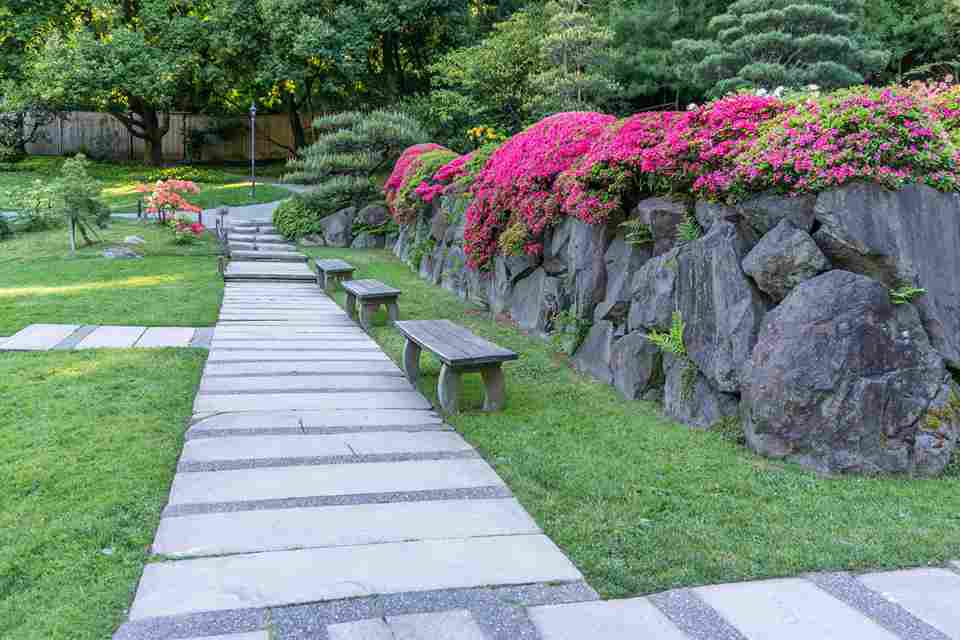
Flagstone is the material most homeowners picture when they imagine a natural-looking walkway. It’s quarried stone, typically bluestone, limestone, or slate, cut into irregular or semi-regular slabs and laid in patterns that emphasize the material’s natural variation. On the right property, a flagstone walkway looks like it grew there.
Bluestone is the strongest performer among flagstone options in the Ithaca climate. It’s dense, absorbs relatively little water, and handles freeze-thaw stress better than softer stones like sandstone or some varieties of limestone. Local availability through regional suppliers keeps bluestone pricing competitive compared to stones that require longer-distance transport. Properties throughout the East Hill and Belle Sherman neighborhoods use bluestone walkways that have held up for decades when the base work was done properly.
The irregular nature of flagstone, which is part of its visual appeal, also creates a specific installation challenge. Each stone sits at a slightly different thickness, and achieving a level, stable surface requires skilled handwork to set each piece individually at the correct depth. That process takes more labor time than installing a uniform paver system, which contributes to higher per-square-foot costs on flagstone projects.
Dry-laid versus wet-laid flagstone is a decision that affects both performance and maintenance. Dry-laid flagstone, set in compacted stone dust without mortar, allows for some natural movement through freeze-thaw cycles without cracking. Wet-laid flagstone, set in a mortar bed over a concrete base, produces a tighter, more refined surface but is less forgiving of frost movement. In Ithaca’s climate, dry-laid installations over a properly prepared base often perform better long-term because they can flex slightly rather than cracking under frost pressure.
Flagstone joints, whether filled with polymeric sand, ground cover plants, or left open, require ongoing attention. Weeds establish in joints readily in Ithaca’s growing season, and polymeric sand joints may need refreshing every few years as freeze-thaw cycling gradually works material loose.
Concrete Pavers: Engineered for Cold Climate Performance
Concrete pavers are manufactured to precise dimensions and tolerances, which makes installation faster and the finished surface more uniform than natural flagstone. For homeowners who want a clean, consistent look or need a walkway that handles heavy foot traffic reliably, pavers are often the stronger functional choice.
High-quality concrete pavers are engineered specifically for freeze-thaw resistance, with low water absorption rates and compressive strength ratings that exceed most natural stones. They don’t crack the way poured concrete does, because individual units can move slightly relative to each other without the surface failing. If a paver does crack or chip, individual units can be replaced without disturbing the rest of the installation.
The range of paver styles, colors, and textures available today is wide enough that the “concrete paver look” many homeowners associate with uniform, utilitarian surfaces is largely outdated. Tumbled pavers, dimensional formats, and varied color blends can produce walkways that read as natural and traditional rather than industrial. On properties where a consistent surface is needed for accessibility, like a front entry walkway on a South Hill lot with grade changes, pavers are often the most practical choice.
Cost for paver walkways in the Ithaca area generally falls within the same range as flagstone, roughly $18 to $35 per square foot installed, with the specific number depending on paver style, site conditions, and base requirements. Premium paver styles and complex patterns push toward the higher end. The base preparation cost is the same regardless of surface material, because Ithaca’s soil and frost conditions set that requirement, not the stone.
One trade-off with concrete pavers is that they can fade over time with UV exposure, and lower-quality units show that fading unevenly. Investing in a quality paver product from the outset pays off in consistent appearance over the life of the installation.
Why Base Preparation Determines Long-Term Performance
The most common mistake made in walkway installation across all stone types is underestimating what the base needs to be. In Ithaca’s climate, frost penetrates the ground to significant depths, and clay-heavy soil holds moisture rather than draining it away. Those two conditions together create intense upward pressure on any paved surface during freeze cycles.
A properly built base for a walkway in Ithaca typically includes excavation to a depth that gets below the frost line, a compacted gravel base layer that drains freely, and a bedding layer of stone dust or compacted aggregate that allows for precise leveling of the surface material. Shortcuts at any stage of this process, using too little base depth, skipping proper compaction, or grading the base flat rather than pitching it for drainage, create frost heaving problems that no stone material can overcome.
DIY walkway projects in Ithaca fail most often at this stage, not because the homeowner chose the wrong stone, but because proper base construction requires equipment, material volume knowledge, and compaction technique that a first-time installer doesn’t typically have. A stone walkway that starts lifting and tilting within two winters usually has a base problem, and correcting it means pulling the surface apart and starting over, which costs more than a professional installation would have in the first place.
Drainage routing matters just as much as depth. A walkway that collects water along its edges or sits in a low spot that ponds after rain is a problem waiting to happen regardless of base quality. Water that saturates the base material before a freeze cycle expands more aggressively than water in well-drained soil, and that expansion is what breaks mortar joints, tips pavers, and cracks stone. A professional installer evaluates where water flows across the site before the first stake goes in.
Proper hardscape and stonework installation accounts for all of these factors as a single system, not a series of independent decisions made during construction.
Seasonal Timing for Walkway Installation in Ithaca
The best installation window for walkway stone in Ithaca runs from late April through mid-October. Ground that is still frozen or saturated from spring snowmelt can’t be properly excavated or compacted, and a base built over wet, unstable soil will settle unevenly once it dries. Starting before conditions are right creates problems that follow the project through its entire life.
Late spring through early summer is the preferred window for most installations. Soil has dried from snowmelt, temperatures are stable enough for proper curing if any mortar work is involved, and the growing season ahead allows for any grading or drainage adjustments to be verified before the next winter. Contractors in Ithaca fill installation slots quickly once spring arrives, and most reputable crews are booked several weeks in advance by May.
Fall installations through mid-October can work well, particularly for dry-laid stone that doesn’t require curing time. The caveat is that any disturbed soil around the installation needs enough time to stabilize before ground freeze, and late-season projects don’t leave room for addressing any issues that surface after completion. Spring remains the stronger choice for projects with significant grading, drainage work, or new base construction involved.
Scheduling a consultation early, ideally in late winter or early spring, gives you the best chance of securing a summer installation slot and allows time for a proper site assessment before any material is ordered. You can reach out through the contact page to get that process started.
Choosing the best walkway stone for your property is a decision that benefits from local expertise, and VP Designs Lawn & Landscape has the site-specific knowledge to guide that choice for Ithaca, New York and the surrounding areas. Call (607) 592-5505 to schedule a consultation and get a realistic assessment of what your property needs, from material selection through base preparation and drainage planning.
Frequently Asked Questions About Best Walkway Stone
Q: What is the best walkway stone for cold climates like Ithaca?
A: Dense, low-absorption stones like bluestone and high-quality concrete pavers perform best in Ithaca’s freeze-thaw climate. Softer stones like sandstone and some limestones absorb more water and are more vulnerable to surface spalling and cracking after repeated freeze cycles. Material choice matters, but base preparation is the bigger factor in long-term performance.
Q: How much does a stone walkway cost to install in Ithaca, NY?
A: Installed walkway costs in the Ithaca area typically range from $18 to $35 per square foot, depending on material, pattern complexity, and site conditions. Properties with significant grade changes, root obstacles, or drainage challenges sit toward the higher end of that range. A site visit is the only reliable way to produce an accurate number for a specific property.
Q: Is flagstone or pavers better for a front walkway in Ithaca?
A: Both work well when properly installed. Flagstone produces a more natural, organic appearance and suits traditional or wooded property settings well. Concrete pavers offer more consistency, easier replacement of damaged units, and slightly more predictable performance in high-traffic areas. The decision often comes down to the property’s existing character and the homeowner’s maintenance preferences.
Q: What causes stone walkways to shift and heave in Ithaca winters?
A: Frost heaving is the primary cause, driven by water in the base or surrounding soil expanding during freeze cycles. Ithaca’s clay-heavy soils retain moisture rather than draining it, which intensifies that pressure. Walkways built on insufficient base depth or without proper drainage routing are especially vulnerable. A properly prepared base that drains freely and extends below the frost line resists heaving effectively.
Q: Can I install a stone walkway myself and save money?
A: Surface laying is manageable for experienced DIYers on small, flat projects. The base excavation, compaction, and drainage routing are where most DIY walkway installations in Ithaca fall short. Getting those stages wrong means the walkway will need to be pulled apart and rebuilt, often within a few seasons, at a cost that exceeds what professional installation would have run initially.
Q: How do I maintain a stone walkway through Ithaca’s winters?
A: Avoid using rock salt on natural stone walkways, as it accelerates surface deterioration and damages jointing materials. Sand-based ice melt products are a better option. Keep joints clear of debris going into winter, and address any loose or shifted stones promptly rather than letting small movement compound into larger instability. Annual inspection after frost season helps catch issues early.
Q: Does a stone walkway add value to a home in the Ithaca area?
A: A well-installed stone walkway improves curb appeal, improves access, and signals quality maintenance to prospective buyers. In Ithaca’s real estate market, where older homes with aging concrete or asphalt paths are common, a properly built natural stone or paver walkway stands out. The return depends on overall property condition and project quality, but professional hardscape work consistently adds perceived and real value.
Conclusion
Selecting the best walkway stone for an Ithaca property comes down to understanding what the material needs to survive here, not just what looks good in a photo. Bluestone and quality concrete pavers are both proven options in the Finger Lakes climate when installed over a properly prepared base with drainage built into the plan from the start. The stone on top is visible; the work underneath it is what makes that stone last.
Investing in professional installation means the base gets built to the depth and specification Ithaca’s soil and frost conditions actually require. That’s the part of the project that determines whether your walkway looks the same in year ten as it did in year one, and it’s the part that shortcuts always end up costing more to fix than they saved upfront. A well-built stone walkway is one of the most durable and visually consistent improvements you can make to a property in this region.