
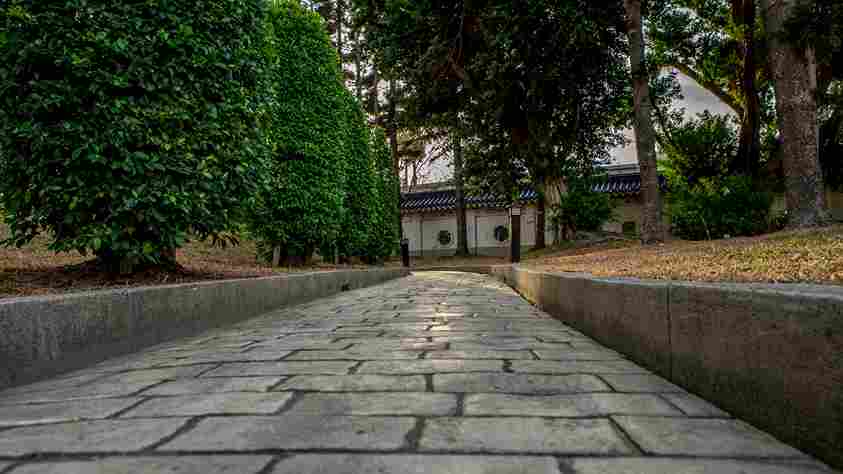
Stone walkway projects generate more material questions than almost any other hardscape job. Homeowners in Ithaca who start researching their options quickly discover that the range of available stone types is wide, the terminology is inconsistent across suppliers, and the advice online rarely accounts for the specific demands of a Finger Lakes climate. A material that performs beautifully in a mild coastal market can crack, heave, or stain badly in an environment with dozens of freeze-thaw cycles every winter.
This article covers the most common types of stone for walkways used on Ithaca-area residential and commercial properties, how each material performs under local climate conditions, what the installation requirements are for each type, and how to match material selection to the specific conditions of your property. Whether you are planning a front entry walk in Cayuga Heights or a backyard path through an established garden in Forest Home, choosing the right stone from the start is what separates a walkway that looks good for twenty years from one that needs attention every spring.
Key Takeaways
- Stone type selection for Ithaca walkways must account for freeze-thaw performance, not just aesthetics, because the wrong material choice leads to cracking, spalling, and heaving within a few seasons.
- Bluestone, natural flagstone, granite, and concrete pavers are the most commonly used walkway materials in the Ithaca area, each with distinct performance characteristics and installation requirements.
- Base preparation quality matters more than surface material selection for long-term walkway performance in Ithaca’s climate.
- Porous or textured stone surfaces provide better traction through Ithaca winters than polished or smooth materials, which become hazardous when wet or icy.
- Material cost ranges from moderate to premium depending on stone type, origin, and installation complexity, with installed costs typically running $18 to $35 per square foot for most walkway projects.
- Professional installation with correct base depth and drainage design is the most reliable way to protect a stone walkway investment through repeated freeze-thaw cycles.
Why Material Selection Matters More in Ithaca Than in Most Markets
Stone walkway material selection involves trade-offs between aesthetics, durability, cost, and maintenance requirements in any market. In Ithaca, freeze-thaw performance adds a constraint that overrides aesthetic preference when the two come into conflict. A stone that looks exactly right for a property but absorbs water readily and develops internal fractures through repeated freeze-thaw cycles is the wrong choice regardless of how good it looks in the first season.
The Finger Lakes region averages significant freeze-thaw cycling through the winter months, with temperatures dropping below freezing overnight and rising above it during the day, sometimes within the same twenty-four-hour period during shoulder seasons. Water that penetrates into porous stone or into gaps in a walkway surface expands when it freezes, applying pressure that fractures stone faces, pops loose individual units, and gradually undermines base stability. Material selection that accounts for this reality from the start prevents the repair and replacement cycles that poorly chosen stone generates.
VP Designs Lawn & Landscape specifies walkway materials based on site conditions, intended use, and climate performance alongside aesthetic goals. A beautiful material that requires annual repairs or becomes a safety hazard after the first hard frost is not a good recommendation for an Ithaca property regardless of how well it photographs. The goal is a walkway that requires minimal intervention and looks good year after year, not one that demands ongoing attention to stay functional.
The full hardscape and stonework services available in this area cover material selection, base preparation, drainage design, and installation for walkway projects of all scales. Getting those decisions right from the planning phase is what produces results that hold up through Ithaca winters without constant repair.
Bluestone: The Regional Standard for Ithaca Walkways
Bluestone is the most widely used natural stone for walkways in the Ithaca area, and for good reason. It is quarried regionally in the Hudson Valley and Catskill areas of New York, which keeps material costs reasonable relative to imported stone, and its performance characteristics align well with the demands of a Finger Lakes climate.
Natural cleft bluestone has a split face texture that provides excellent traction, resists surface spalling from freeze-thaw exposure, and develops a weathered character over time that suits the mature residential neighborhoods common across Ithaca. The irregular surface texture means water does not pool on the walking surface, which reduces ice formation during shoulder-season freeze-thaw events. Natural cleft bluestone is available in irregular flagstone shapes and in dimensional cut pieces, giving designers flexibility to work with either a naturalistic or more formal aesthetic.
Thermal finish bluestone has a flamed surface that is smoother than natural cleft but more textured than polished stone. It holds up well in freeze-thaw conditions and presents a cleaner, more contemporary appearance than irregular flagstone. Thermal bluestone in cut dimensional sizes works well for formal front entry walks where consistent joint spacing and clean geometry are priorities. The smoother surface requires more attention to drainage design to prevent water ponding, but it remains a reliable performer in Ithaca’s climate when installed correctly.
Bluestone installed as irregular flagstone, sometimes called crazy paving, uses pieces of varying size and shape set in a pattern that fills the walkway area with minimal waste. This installation approach works well on curved or free-form paths where the organic layout suits the surrounding landscape. Irregular flagstone requires more installation skill than dimensional cut stone because each piece needs to be fitted and leveled individually, but the result has a natural quality that suits wooded or garden-style settings common in Forest Home and similar Ithaca neighborhoods.
Granite: Durability at a Higher Price Point
Granite is among the hardest and most durable natural stones available for walkway applications. Its low porosity makes it highly resistant to freeze-thaw damage, and its density means it holds up under heavy foot traffic without wearing or chipping over time. For high-use walkways, commercial entry areas, or projects where longevity is the primary criterion, granite is a strong material choice.
Granite cobblestones and sett pavers are the most common granite applications in Ithaca-area residential landscaping. Sett pavers, the small rectangular units historically used in street paving, create a classic appearance that suits older residential neighborhoods and formal garden settings. They install over a sand-set or mortar-set base and, when properly installed, move with freeze-thaw cycles without cracking because the individual units are small enough to accommodate minor base movement without fracturing.
Granite slabs in larger dimensional sizes are used for formal walkways and entry paths where a premium material statement is appropriate. Large granite slabs require excellent base preparation because the larger the individual unit, the less tolerance it has for differential settlement. A large slab that settles unevenly at one corner creates a trip hazard and a drainage problem simultaneously. In Ithaca’s clay soils, which are prone to frost heave, large slab installation requires deeper base preparation than smaller unit pavers to manage that movement risk.
The primary limitation of granite for residential walkway projects is cost. Granite material runs higher than bluestone or concrete pavers, and the weight of granite slab products increases installation labor costs. For homeowners with a defined budget, granite is often best reserved for high-visibility accent elements or specific zones within a larger walkway project rather than applied across the entire surface area.
Natural Flagstone: Variety and Site-Specific Performance
The term flagstone covers a broad category of sedimentary and metamorphic stone types that are split or cut into flat pieces suitable for paving. Beyond bluestone, which is technically a type of flagstone, other natural flagstone materials available for Ithaca walkway projects include Pennsylvania bluestone, slate, limestone, and sandstone. Each has distinct characteristics that affect how well it performs in this climate.
Slate is a fine-grained metamorphic rock that splits into thin, flat pieces and has a distinctive layered appearance. It is attractive and relatively affordable, but its layered structure makes it vulnerable to delamination in freeze-thaw environments. Water that penetrates between the layers expands when it freezes and separates the stone along its natural cleavage planes. Slate can work on covered or sheltered walkway applications in Ithaca, but exposed walkways subject to full weather exposure and ice melt product contact are not ideal applications for this material.
Limestone offers warm color tones that contrast with the cooler grey palette of bluestone and granite. It is softer than granite and moderately porous, which creates two concerns for Ithaca applications: surface wear on high-traffic walkways over time, and freeze-thaw absorption that can cause surface spalling in harsh winters. Denser, harder limestone varieties perform better than softer ones, and sealing limestone walkways in Ithaca’s climate reduces moisture absorption and extends surface life. Applications in sheltered or lower-traffic zones are better suited to limestone than main entry walkways that receive heavy use and winter weather exposure.
Sandstone carries similar limitations to limestone in a freeze-thaw climate. Its porous structure absorbs water readily, and freeze-thaw cycling causes surface pitting and spalling over time on exposed installations. Sandstone is best avoided for primary walkway applications in Ithaca unless it is a dense, low-porosity variety specifically tested for cold-climate performance. For decorative accent elements in sheltered locations, it can work, but it should not be the primary surface material on an exposed walkway.
Concrete Pavers: Performance and Flexibility
Concrete pavers are a manufactured product rather than a natural stone, but they deserve inclusion in any honest discussion of walkway materials for Ithaca properties because their performance characteristics and design flexibility make them a practical choice for many residential applications.
Modern concrete pavers are produced to high density and low porosity standards that give them good freeze-thaw resistance when the base preparation is correct. They are available in a wide range of colors, textures, and profiles, including products that closely replicate the appearance of natural stone at a lower material cost. For homeowners who want the look of a natural flagstone walkway with more consistent sizing and easier installation, quality concrete pavers are a realistic alternative.
Permeable concrete pavers are a specialized product category worth considering on Ithaca properties with drainage challenges. These units are manufactured with gaps or voids that allow water to pass through the walkway surface into a designed aggregate base rather than running off the surface. On properties where the existing drainage creates water management challenges near the house, a permeable paver walkway can reduce surface runoff while providing a durable walking surface. This application connects directly to broader professional landscape maintenance considerations because a walkway that manages water effectively reduces the drainage stress on surrounding lawn and planting areas.
The limitation of concrete pavers relative to natural stone is longevity of appearance. Natural stone develops character and patina over decades of weathering. Concrete pavers can fade, and color consistency between original installation and replacement units can be difficult to match years later when repairs are needed. For homeowners who prioritize the authentic character of natural stone, concrete pavers are a practical compromise rather than an equivalent substitute.
Base Preparation: The Factor That Determines Walkway Longevity
Material selection gets most of the attention in walkway planning conversations, but base preparation is what actually determines whether a walkway holds up through Ithaca’s climate. A beautifully selected bluestone walkway installed on an inadequate base will heave, settle, and crack within a few seasons. The same material installed on a correctly designed base will perform for decades with minimal intervention.
The standard base for a stone walkway in Ithaca’s climate includes a compacted aggregate base of crushed stone at adequate depth to get below the frost line, a leveling course of coarse sand or stone dust, and the surface material on top. The aggregate base depth for Ithaca conditions should account for the freeze-thaw movement that occurs when the ground freezes to significant depth through the winter. Contractors who use base depths appropriate for milder climates consistently produce walkways that show movement after the first few winters.
Drainage design within the base system matters as much as depth. Water that cannot drain freely from beneath the walkway will freeze in place and expand, pushing the surface upward. The aggregate base needs to be graded to direct water away from the walkway rather than holding it in place. On properties with significant clay content in the sub-base, a geotextile fabric layer between the native soil and the aggregate base prevents clay migration into the aggregate over time, which preserves the drainage function of the base through years of seasonal movement.
Edge restraints secure the perimeter of a walkway and prevent lateral movement of the surface units over time. Without adequate edge restraint, individual units gradually migrate outward as the base cycles through freeze-thaw movement, creating gaps at the joints and uneven surfaces at the edges. Edge restraint systems need to be anchored below the frost line to resist the same heave forces that act on the walkway surface.
Installation timing also matters in Ithaca. The window from late April through mid-October gives base materials adequate time to be properly compacted and settled before the first freeze. Installing a walkway in late fall when ground temperatures are already dropping reduces the effectiveness of compaction and leaves the base in a partially settled state when the first freeze arrives. Planning projects for spring or early summer gives the installation the best chance of performing well through its first winter.
For properties that also need consideration of how winter snow management affects walkway surfaces, coordinating material selection with snow and ice management practices is worth doing upfront. Some ice melt products damage certain stone types, and knowing which products are compatible with the selected material before installation avoids surface damage from the first winter treatment.
When you are ready to plan a stone walkway for your Ithaca property, VP Designs Lawn & Landscape serves Ithaca, New York and the surrounding areas with hardscape design and installation built around material selections and base systems that hold up through Finger Lakes winters. Call (607) 592-5505 to schedule a site visit and get a straightforward recommendation on which stone type and installation approach makes sense for your specific property.
Frequently Asked Questions About Types of Stone for Walkways
Q: What is the best type of stone for walkways in Ithaca’s climate?
A: Bluestone and granite consistently perform best in the Ithaca area because of their freeze-thaw resistance and low porosity. Natural cleft bluestone is the regional standard for good reason: it is quarried nearby, performs reliably through Finger Lakes winters, and provides natural traction on its textured surface. Granite is the more durable choice for high-traffic or commercial applications where longevity is the primary criterion.
Q: Why does stone crack or heave on Ithaca walkways after only a few years?
A: Premature cracking and heaving almost always trace back to inadequate base preparation rather than material failure. A base that is too shallow, poorly compacted, or lacks adequate drainage will move during freeze-thaw cycles and transmit that movement to the surface. In Ithaca’s climate, base depth and drainage design are the most important variables in walkway longevity, and shortcuts in those areas produce visible problems within a few seasons regardless of how good the surface material is.
Q: Is slate a good choice for a walkway in Ithaca?
A: Slate is not ideal for exposed walkway applications in Ithaca. Its layered structure makes it vulnerable to delamination when water penetrates between layers and freezes. Sheltered applications away from direct weather exposure and ice melt product contact can work, but for a main entry walk or any surface that sees full weather exposure and winter treatment, bluestone or granite are more reliable choices.
Q: How much does a stone walkway installation cost in Ithaca?
A: Installed costs for stone walkways in the Ithaca area typically run $18 to $35 per square foot, covering excavation, base preparation, and surface installation. Material choice affects where within that range a project lands, with granite and premium imported stone at the higher end and regional bluestone and quality concrete pavers more toward the middle. Base preparation complexity, site access, and walkway design also affect final cost.
Q: Can I use ice melt products on natural stone walkways?
A: It depends on the stone type and the product. Calcium chloride and sodium chloride ice melt products can damage softer or more porous stones like limestone and sandstone through surface spalling and salt crystallization. Granite and dense bluestone tolerate ice melt products better, but even on durable stones, high-concentration applications over multiple winters can affect surface finish over time. Using sand for traction rather than chemical ice melt is the most conservative approach for preserving natural stone surfaces.
Q: What is the difference between flagstone and dimensional cut stone for walkways?
A: Flagstone refers to irregular pieces of natural stone that vary in size and shape, set in a pattern that fills the walkway area with fitted joints between pieces. Dimensional cut stone refers to pieces cut to consistent sizes and shapes, installed with uniform joint spacing. Flagstone has a more naturalistic appearance suited to garden paths and informal settings. Dimensional cut stone presents a more formal, geometric appearance suited to entry walks and contemporary designs. Both can use the same stone types, including bluestone and granite, and both require the same base preparation standards for Ithaca’s climate.
Q: How long should a properly installed stone walkway last in Ithaca?
A: A walkway installed with the correct base depth, drainage design, and quality surface material should last thirty years or more with routine maintenance in Ithaca’s climate. The maintenance requirement for a well-built stone walkway is minimal: periodic joint sand replenishment on sand-set installations, cleaning as needed, and prompt attention to any individual units that show early signs of movement before they create trip hazards or allow water infiltration. Walkways that require significant repair within the first five to ten years almost always had base preparation deficiencies rather than material failures.
Conclusion
Choosing the right type of stone for a walkway in Ithaca is a decision that needs to account for freeze-thaw performance, site-specific drainage conditions, and installation quality alongside the aesthetic goals that typically drive material conversations. Bluestone and granite have earned their dominant position in the Ithaca market through consistent performance, not just regional familiarity, and the reasons they work well here are directly tied to the climate conditions that make some other materials poor choices for this environment.
The best stone walkway investment is one where the right material is installed on the right base with the drainage design that the site requires. Material selection without attention to base preparation produces attractive surfaces that deteriorate faster than they should. Base preparation without thoughtful material selection produces durable structures that may not serve the property as well as they could. Getting both right from the start is what produces a walkway that holds up through every Ithaca winter and continues to look like a quality installation decades later.