Most Ithaca homeowners think about landscape maintenance when something looks wrong: the lawn is overgrown, the beds are full of weeds, the shrubs are pushing against the house. That reactive framing is understandable, but it’s also the reason so many properties spend the growing season playing catch-up rather than looking their best. Landscape maintenance done well is not a cleanup service. It’s an ongoing management system that keeps a property functioning correctly through every season, and in a climate like Ithaca’s, that distinction matters more than most people realize.
Neighborhoods like Belle Sherman and Fall Creek are full of properties with mature plantings, established trees, and decades of layered landscape character. Keeping that kind of outdoor space healthy and attractive requires consistent, knowledgeable attention through spring cleanup, summer management, fall preparation, and everything in between. Understanding what landscape maintenance actually covers helps homeowners make better decisions about what their property needs and what professional service genuinely delivers.
Key Takeaways
- Landscape maintenance covers all recurring tasks that keep an outdoor space healthy and functional: mowing, edging, bed management, pruning, mulching, fertilization, and seasonal cleanup.
- In Ithaca’s compressed growing season, the timing of maintenance tasks matters as much as the tasks themselves; missing the right window changes the outcome for the rest of the season.
- Clay-heavy soils, significant weed pressure, and freeze-thaw cycling create maintenance demands that are specific to this region and require a program calibrated to local conditions.
- Seasonal maintenance contracts for Ithaca residential properties typically run $150 to $400 per month depending on property size and service scope.
- Professional maintenance prevents the compounding problems that develop when seasonal tasks are deferred, including soil compaction, erosion, weed establishment, and plant decline.
- A well-maintained landscape protects the investment made in hardscape, plantings, and lawn establishment by keeping every element performing the way it was designed to perform.
What’s Landscape Maintenance and What Does It Actually Include
What’s landscape maintenance in practical terms? It’s the full set of recurring services that keep a designed outdoor space healthy, functional, and visually consistent through the growing season and into winter preparation. It’s not a single service. It’s a coordinated program of tasks, each timed to the seasonal calendar and calibrated to the specific conditions of the property.
VP Designs Lawn & Landscape provides professional landscape maintenance for Ithaca and the surrounding areas with programs built around the real seasonal demands of Finger Lakes properties. The company’s approach treats maintenance as active management, addressing conditions before they become problems rather than after they’re already visible.
The core components of a professional landscape maintenance program include lawn mowing and edging, planting bed weeding and cultivation, mulch application and replenishment, ornamental shrub and tree pruning, seasonal fertilization, aeration, spring and fall cleanup, and ongoing plant health monitoring. These aren’t independent tasks. They interact with each other in ways that make the whole program more effective than any single service delivered in isolation. Lawns mowed at the right height retain moisture better and resist weed encroachment. Beds mulched correctly suppress germination and regulate soil temperature. Shrubs pruned at the right point in the seasonal calendar bloom fully the following year.
What’s landscape maintenance for a specific property depends on what that property has, what condition it’s in, and what the homeowner wants from it. A basic program covering mowing and seasonal cleanups delivers a baseline level of care. A full-service program that adds bed management, fertilization, pruning, and seasonal monitoring delivers a property that looks consistently well-kept and stays ahead of the problems that accumulate when any part of the program is skipped.
The Tasks That Make Up a Complete Maintenance Program
Breaking down what’s landscape maintenance by task category helps clarify what a professional service agreement should cover and where the value of professional versus DIY execution is highest.
Lawn care is the most visible component of any maintenance program and the one with the most technical nuance beneath the surface. Mowing at the correct height for the grass varieties present, maintaining sharp blades that cut cleanly rather than tearing, adjusting frequency through the active growth periods of late spring, and managing clippings appropriately all affect long-term lawn health in ways that aren’t visible immediately but compound over several seasons. Cool-season grasses common in Ithaca, including Kentucky bluegrass and tall fescue blends, perform best when maintained at three to four inches through the active growing season. Cutting shorter than that stresses the plant, reduces root depth, and opens the surface to weed encroachment.
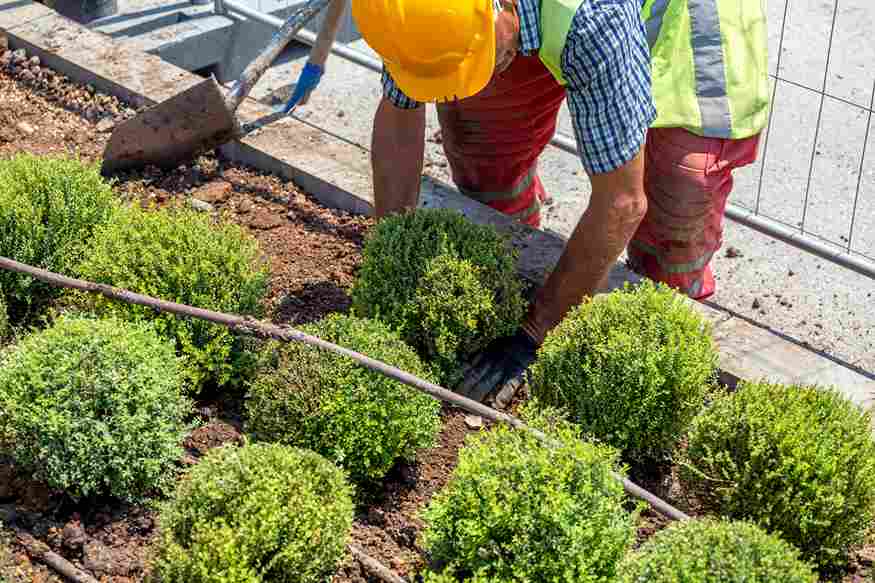
Bed management is where the majority of seasonal labor goes on a well-planted Ithaca property. Weeding, cultivating the soil surface, managing mulch depth, and monitoring the health of perennials and shrubs require consistent attention through the growing season. A bed that receives thorough spring preparation and regular summer maintenance stays manageable. A bed that falls behind in May is managing established weed populations by July that require significantly more effort to bring back under control. Ithaca’s weed pressure is real: creeping Charlie, wild violet, and garlic mustard establish aggressively in disturbed or poorly managed beds and require persistent management to keep in check.
Pruning and shrub management require knowledge of which plants to cut, when to cut them, and how much to remove without compromising structure or bloom cycles. Shrubs pruned at the wrong time lose the growth that would have produced the following season’s flowers. Trees and large shrubs cut too aggressively, or with improper technique that leaves large wounds, develop structural problems and disease entry points that persist for years. A professional with experience in Ithaca’s plant palette knows the difference between a shrub that benefits from aggressive renovation pruning and one that needs only light shaping, and handles each accordingly. Reviewing the full scope of professional landscape services provides a complete picture of what a managed maintenance program covers across a full season.
How Ithaca’s Climate Shapes Maintenance Demands
What’s landscape maintenance in a mild climate is a different set of challenges than what it is in Ithaca. The Finger Lakes region’s compressed growing season, late spring frost window, heavy summer weed pressure, and aggressive fall transition create a maintenance calendar with less margin for error than most national guides account for.
Spring in Ithaca arrives late and moves fast. The active maintenance window opens in late April when ground temperatures stabilize, but late frosts can arrive as late as mid-May, which complicates decisions about when to cut back tender perennials and when to apply pre-emergent products. The window between last frost and the onset of active summer growth is short, which means spring cleanup, bed preparation, edging, and early fertilization all need to happen in a concentrated period. Properties where that spring work is thorough and timely emerge looking dramatically better than those where it’s rushed or incomplete.
Summer maintenance in Ithaca manages the consequences of the region’s wet spring transition into a warmer, more variable summer. Heavy clay soils that were saturated through April become compacted under foot traffic as they dry, restricting root development in lawn areas. Weed germination in mulched beds peaks in June and July, and getting ahead of that cycle through consistent weeding and correct mulch depth makes the difference between manageable summer maintenance and an overwhelming weed problem. Dry spells in July and August stress shallow-rooted plantings, particularly in yards where irrigation isn’t available, and monitoring plant health through those periods allows early intervention before stress becomes decline.
Fall preparation is the maintenance window that most directly determines how a property comes through winter and how quickly it recovers in spring. Aerating the lawn in fall relieves the compaction that accumulated through the growing season and improves root development through the dormant period. Applying winterizing fertilizer at the right time supports root growth before the ground freezes. Cutting back perennials appropriately, mulching beds to the right depth, and completing final cleanup before the first hard freeze sets the property up for a cleaner, faster spring emergence. In Ithaca, that first hard freeze typically arrives in late October, and the fall maintenance window closes faster than most homeowners anticipate. Coordinating fall landscape work with the start of snow and ice management service ensures the full seasonal transition is handled without gaps between the two programs.
What Professional Maintenance Prevents
A clearer way to understand what’s landscape maintenance is to understand what consistent professional care prevents. The problems that develop on unmaintained or poorly maintained Ithaca properties are predictable, and most of them cost more to correct than the maintenance program that would have prevented them.
Soil compaction develops gradually on clay-heavy lots and becomes visible as thinning lawn, standing water after rain, and reduced plant vigor. Annual fall aeration relieves compaction and restores the soil structure that roots need to develop depth and access nutrients. A lawn that hasn’t been aerated in several years requires more aggressive intervention to recover than one maintained on a consistent aeration schedule.
Weed establishment follows a predictable cycle that consistent maintenance interrupts at the right point. Weeds that germinate in spring and are removed before they set seed don’t contribute to the following year’s seed bank in the bed. Weeds that are allowed to mature and set seed through one summer create a more significant management challenge the following spring, and that challenge compounds each season it isn’t addressed. The beds on properties with consistent professional maintenance look visibly cleaner than those managed reactively because the weed cycle is being interrupted early rather than managed after it’s fully underway.
Erosion on sloped properties is a direct consequence of inadequate ground cover and deferred maintenance. Ithaca’s hillside neighborhoods experience real soil movement during spring snowmelt and heavy summer rain events when slopes aren’t stabilized by healthy lawn, appropriate ground cover, or maintained planting. Once a slope begins eroding, addressing it requires more than resuming regular maintenance. It often requires soil amendment, reestablishment of ground cover, and in some cases structural support from hardscape and retaining wall work to stabilize the grade before plantings can be reestablished.
Plant decline from inadequate pruning, fertilization, or pest and disease management is slow enough that many homeowners don’t connect it to the maintenance decisions that caused it. Shrubs that were never properly shaped develop crossing branches, interior dieback, and reduced vigor over several seasons. Lawns that were fertilized with the wrong product for the soil pH present show persistent thinness regardless of mowing and watering. These outcomes are correctable but require more intervention than consistent professional maintenance would have required to prevent them. In areas where natural lawn faces persistent challenges from shade or root competition, pairing professional maintenance with solutions like artificial turf installation reduces the overall maintenance burden while improving year-round performance.
What Landscape Maintenance Costs in the Ithaca Area
Seasonal maintenance contracts for residential properties in the Ithaca area typically run $150 to $400 per month, with property size and service scope being the primary variables. A smaller urban lot with a basic program covering mowing, edging, and seasonal cleanups sits toward the lower end of that range. A larger property with extensive planting beds, ornamental shrubs, significant pruning needs, and full seasonal fertilization management sits toward the higher end.
Per-visit pricing for individual services costs more over a full season than a contracted program covering the same scope of work. It also produces less consistent results because the timing of each visit responds to budget and scheduling rather than to what the property actually needs at a specific point in the growing calendar. A lawn that isn’t mowed for three weeks in June because the homeowner is managing per-visit costs doesn’t just look overgrown. It accumulates stress that requires recovery time and produces thatch buildup that affects the following season.
The comparison that matters most is not maintenance cost against zero maintenance cost. It’s maintenance cost against the cost of correcting the problems that develop without it. A bed renovation to address three years of accumulated weed pressure, a lawn restoration after years of soil compaction, or shrub removal and replacement after years of improper pruning all represent investments that dwarf what a consistent maintenance program would have cost. Coordinating maintenance with the full range of outdoor property services through a single provider also simplifies scheduling and ensures that seasonal transitions across all property elements are managed cohesively.
For Ithaca homeowners ready to move from reactive management to a consistent professional maintenance program, VP Designs Lawn & Landscape serves Ithaca, New York and the surrounding areas with maintenance programs calibrated to the specific demands of Finger Lakes properties. Call (607) 592-5505 to schedule a site assessment, discuss what your property needs, and find out what a professional maintenance program looks like for your specific situation. You can also connect through the project contact page to get the conversation started.
Frequently Asked Questions About What’s Landscape Maintenance
Q: What’s landscape maintenance and how is it different from basic lawn care?
A: Lawn care typically refers to mowing and basic turf management. Landscape maintenance is a broader service that covers the full outdoor space: lawn mowing and edging, planting bed weeding and cultivation, mulch management, shrub and ornamental pruning, fertilization, aeration, and spring and fall cleanup. In Ithaca, where mature plantings, clay soils, and a compressed seasonal calendar create real management complexity, the distinction between basic lawn care and full landscape maintenance is significant.
Q: How much does landscape maintenance cost in the Ithaca area?
A: Seasonal contracts for residential properties typically run $150 to $400 per month depending on property size and service scope. A smaller lot with a basic program sits toward the lower end. A larger property with extensive beds, significant pruning needs, and full seasonal management sits toward the higher end. Contracted seasonal service consistently delivers better results and lower total cost than per-visit reactive service for equivalent scope.
Q: What time of year matters most for landscape maintenance in Ithaca?
A: Spring and fall are the highest-stakes windows. Spring cleanup and bed preparation in late April and early May set conditions for the entire growing season. Fall aeration, winterizing fertilization, and final bed management prepare the property for winter and shape how quickly it recovers in spring. Both windows are compressed in Ithaca’s climate, and missing the right timing changes the outcome in ways that carry through the rest of the season.
Q: Can I do my own landscape maintenance, or is professional service necessary?
A: Homeowners can manage basic mowing and light weeding on simpler properties. The tasks that most directly affect long-term health, correct pruning timing and technique, soil-calibrated fertilization, aeration scheduling, and consistent bed management through peak weed pressure, produce substantially better outcomes with professional execution. In Ithaca’s short growing season, mistimed or incorrect maintenance produces consequences that persist well beyond the task itself.
Q: How does Ithaca’s soil affect what landscape maintenance requires?
A: Clay-heavy soils throughout much of Ithaca compact readily under foot traffic and rainfall, restrict drainage, and hold moisture longer than loamier soils. These conditions favor weed species and fungal pressure that require consistent management to control. Properties on acidic wooded lots in neighborhoods like Northeast Ithaca and Belle Sherman often need soil pH adjustment before fertilization produces its full effect. A professional maintenance program accounts for these soil-specific factors rather than applying a generic treatment schedule.
Q: What’s the difference between landscape maintenance and a one-time cleanup?
A: A one-time cleanup addresses the visible backlog of debris, overgrowth, and deferred work on a property at a single point in time. Landscape maintenance is an ongoing program that prevents that backlog from accumulating in the first place. A cleanup brings a property to a starting point. Maintenance keeps it there through every season by addressing conditions on the right schedule before they develop into visible problems.
Q: Does VP Designs Lawn & Landscape offer maintenance programs for properties that also need hardscape care?
A: Yes. Because landscape maintenance and hardscape performance are directly connected through drainage, edge management, and surface care, working with a provider that handles both produces better results than managing the two separately. VP Designs handles both landscape maintenance and hardscape and stonework for Ithaca-area properties, which means the full outdoor space can be managed cohesively through every season.
Conclusion
What’s landscape maintenance is a question with a longer answer than most homeowners expect, and that length reflects the genuine scope of what it takes to keep an Ithaca property looking and functioning at its best through a full year of Finger Lakes weather. It’s mowing and edging, yes, but it’s also bed management, pruning timed to bloom cycles, fertilization calibrated to soil chemistry, aeration before the ground freezes, and fall preparation done before the window closes in late October.
The properties in Ithaca that look consistently well-kept aren’t lucky. They have a maintenance program behind them that treats the seasonal calendar as a series of opportunities to stay ahead of problems rather than react to them. That approach costs less over time than the corrections required when maintenance is deferred, and it delivers a property that reflects the investment made in designing and building it in the first place.
If your property has been managed reactively and you’re ready to change that, the best time to start a professional maintenance program is before the season’s highest-stakes windows arrive. A well-maintained Ithaca landscape is one of the most rewarding and lasting investments a homeowner can make, and the results of consistent professional care compound positively with every season they accumulate.