Search “artificial turf cost” and you’ll get a dozen national averages that have almost nothing to do with what you’ll actually pay in the Finger Lakes. Those numbers assume flat lots, mild climates, and simple rectangular layouts. Ithaca properties come with clay-heavy soil that drains poorly, steep grade changes that require extra base work, and freeze-thaw cycles that destroy cheap installations within a few seasons. The generic $5 to $20 range you see online doesn’t account for any of that.
Homeowners in Cayuga Heights and South Hill are asking about artificial turf more often, and for good reason. Between shaded yards where grass refuses to fill in, high-traffic side yards that turn to mud every spring, and the growing appeal of low-maintenance outdoor spaces, turf makes sense for a lot of Ithaca properties. But understanding how much is artificial turf installation per square foot here means looking beyond material costs and into the site-specific factors that shape your real number. This guide covers all of it.
Key Takeaways
- Artificial turf installation in the Ithaca area typically costs $8 to $15 per square foot fully installed, with most residential projects landing between $10 and $13 per square foot.
- Base preparation is the biggest cost variable in Ithaca because clay soils and poor drainage require deeper excavation and more aggregate material than installations in sandy or loamy soil regions.
- Turf quality varies dramatically; cheaper products fade, flatten, and lose drainage capacity within a few years under Finger Lakes freeze-thaw conditions.
- Professional installation with proper base depth and drainage prevents the buckling, pooling, and seam failure that plague DIY turf projects in cold climates.
- The best installation window in Ithaca runs from mid-May through mid-October, with early summer providing optimal conditions for base compaction and seam adhesion.
- Over a 10- to 15-year lifespan, artificial turf often costs less than maintaining a natural lawn in the same space when you factor in mowing, fertilizing, aerating, and irrigation.
How Much Is Artificial Turf Installation Per Square Foot in the Ithaca Area?
In the Ithaca area, homeowners should expect to pay $8 to $15 per square foot for a fully installed artificial turf system. That range covers everything from removal of existing material and excavation through base preparation, drainage work, turf installation, infill, and finishing. Most residential projects fall in the $10 to $13 per square foot range once site-specific factors are calculated.
For a typical project, that translates to these ballpark totals. A 200-square-foot side yard or pet area costs roughly $2,000 to $2,600. A 500-square-foot backyard section runs approximately $5,000 to $6,500. A larger 1,000-square-foot lawn replacement lands in the $10,000 to $13,000 range. These figures reflect Ithaca-area labor rates, material sourcing, and the additional base work that our soil and climate conditions require.
VP Designs Lawn & Landscape provides detailed estimates based on an on-site assessment rather than a per-square-foot quote pulled from a spreadsheet. That assessment evaluates your soil type, drainage conditions, access for equipment, and the specific turf product that matches your use case. The per-square-foot price only means something when it reflects what your actual property needs.
National averages often quote lower numbers because they factor in installations on well-draining sandy soil in temperate climates. Ithaca’s conditions push costs toward the middle and upper end of the range for reasons that directly affect how long your installation lasts.
What’s Included in the Per-Square-Foot Price
When homeowners ask how much is artificial turf installation per square foot, they’re often comparing incomplete numbers. A material-only quote looks dramatically different from a fully installed price. Here’s what a complete installation includes and where the money goes.
Excavation and Soil Removal
Every artificial turf installation starts with removing the existing surface. Whether that’s natural grass, mud, gravel, or old landscaping, the top 3 to 4 inches of material gets excavated and hauled away. In Ithaca, where clay soil dominates most residential lots, this step often requires going deeper than the standard 3 inches to reach stable subgrade. Clay holds moisture and shifts seasonally, so leaving too much of it beneath your base layer invites problems down the road.
Excavation typically accounts for 15% to 20% of the total project cost. Properties with limited equipment access, like narrow side yards in Collegetown or fenced backyards with tight gate openings, increase excavation time and cost because materials have to be moved by hand or with compact equipment instead of full-size machines.
Base Preparation and Compaction
The base layer is the foundation that determines whether your turf stays flat, drains properly, and survives Ithaca’s freeze-thaw cycles. A standard base consists of 4 to 6 inches of crushed stone aggregate, compacted in lifts to create a stable, well-draining surface. In areas with particularly poor drainage or high water tables, a layer of geotextile fabric goes down first to prevent clay from migrating up into the aggregate over time.
Base preparation is the single largest cost component, usually representing 25% to 35% of the total price. It’s also where cost-cutting does the most damage. Installers who skimp on base depth or skip compaction passes save a few dollars per square foot upfront, but the result is a surface that settles unevenly, pools water, and buckles after the first winter. Proper base work is non-negotiable in Ithaca’s soil conditions.
Turf Material
The turf itself typically costs $3 to $7 per square foot for the material alone, depending on pile height, fiber type, backing quality, and drainage capacity. That’s roughly 30% to 40% of the total installed price. Lower-end products use thinner fibers and less durable backing that breaks down faster under UV exposure and freeze-thaw stress. Premium products feature polyethylene or nylon fibers with perforated backing that drains at rates of 30 inches per hour or more.
For Ithaca installations, drainage-through backing is essential. Turf products that rely solely on drainage between seams can’t handle the volume of water that spring snowmelt and heavy rain events push across the surface. Products with hole-punched or fully permeable backing systems handle Finger Lakes rainfall patterns far more reliably.
Infill, Seaming, and Finishing
Infill material, usually silica sand or a sand-and-rubber blend, gets brushed into the turf fibers after installation. Seam tape and adhesive join turf panels together, and perimeter edging or nailing secures the borders. These finishing components account for roughly 10% to 15% of the total cost.
Seam quality matters enormously in a cold climate. Adhesives that work fine in Georgia or Arizona may fail in Ithaca when temperatures swing from 50°F to 15°F in a 48-hour period. Professional installers use cold-weather-rated adhesives and seam techniques that flex with temperature changes instead of cracking and separating.
Factors That Push Ithaca Installation Costs Higher or Lower
How much is artificial turf installation per square foot on your specific property depends on site conditions that vary from lot to lot. Here are the factors that move your number above or below the average.
Soil and Drainage Conditions
Properties sitting on heavy clay need more aggressive base preparation than properties with naturally better drainage. If your lot holds standing water after rain or stays soggy for days after snowmelt, the installer may need to add a French drain or channel drain beneath the turf area to move water away from the surface. That drainage work adds $3 to $8 per linear foot on top of the base installation cost, but skipping it guarantees ponding and premature turf failure.
Connecting your turf drainage system with the rest of your property’s water management is critical. Professional landscape maintenance that keeps drainage paths clear and functional protects your turf investment long after the installation crew leaves.
Slope and Grade
Flat lots are the simplest and cheapest to install. Properties with significant grade changes, which are common across South Hill, East Hill, and parts of West Hill, require additional grading work to create a stable surface. Steep sections may also need retaining features or terracing to hold the base material in place. Slope corrections can add $2 to $5 per square foot to the total project cost depending on severity.
If your property already has retaining walls or hardscape features that manage grade changes, the turf installation integrates with those existing structures. If it doesn’t, the grading work becomes part of the turf project scope and cost.
Project Size
Larger projects have a lower per-square-foot cost than small ones. A 1,000-square-foot installation benefits from economies of scale in material purchasing, equipment mobilization, and labor efficiency. A 150-square-foot pet area costs more per square foot because the fixed costs of mobilization, excavation, and base compaction get spread across fewer square feet. Small projects typically land at $12 to $15 per square foot, while larger installations may come in at $8 to $11.
Turf Product Selection
The difference between a $3 per square foot turf product and a $7 product isn’t just appearance. Premium turf features denser fiber counts, stronger backing, better UV stabilization, and higher drainage rates. In Ithaca’s climate, UV resistance and freeze-thaw durability matter more than in warmer regions. A budget product that looks great in year one can fade, flatten, and lose its drainage capacity by year three. Spending an extra $1 to $2 per square foot on quality turf extends the functional lifespan from 8 years to 15 or more.
Why Professional Installation Is Worth the Per-Square-Foot Premium
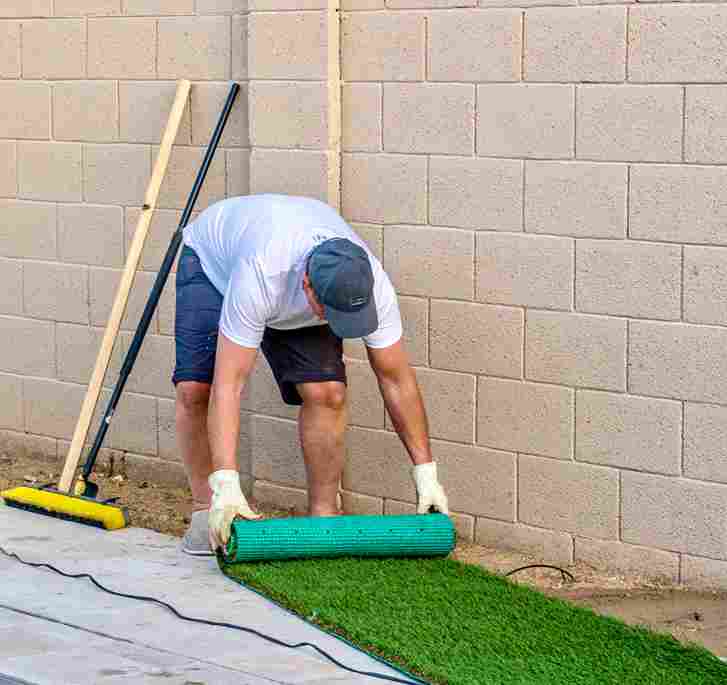
Watching a turf installation video online makes the process look like a weekend project. Dig out the old lawn, spread some gravel, roll out the turf, and brush in the infill. In practice, every step requires precision that directly affects how long the installation lasts, and Ithaca’s conditions amplify every mistake.
DIY Base Failures
The number one reason DIY turf installations fail in this region is inadequate base preparation. Homeowners typically excavate too shallow, use the wrong aggregate, or skip compaction entirely. Without a plate compactor making multiple passes across properly sized crushed stone, the base settles unevenly within the first year. Low spots collect water, high spots create visible bumps, and the entire surface develops a wavy appearance that no amount of infill adjustment can fix. Correcting a failed base means pulling up the turf, re-excavating, and starting over.
Seam and Edge Failures
DIY seams are the second most common failure point. Turf panels need to butt together with fiber direction matched, gap width controlled, and adhesive applied to clean, dry seam tape under the right temperature conditions. Amateur seams show visible lines immediately and separate within a season or two as thermal expansion and contraction stress the joint. Professional installers produce seams that stay invisible and intact because they’ve done hundreds of them in local conditions.
Drainage Integration Errors
Turf installed without understanding the existing drainage pattern can redirect water toward foundations, into neighboring yards, or into areas where pooling creates mosquito habitat and base erosion. Professional installers assess the full drainage context of your property and build the turf system to work within it, not against it. This is especially important on Ithaca’s clay soils, where water doesn’t have anywhere to go unless you give it a deliberate path.
Best Time to Install Artificial Turf in Ithaca
Timing affects both the quality and cost of your installation. Ithaca’s climate limits the practical installation window, and scheduling within that window influences how smoothly the project goes.
Mid-May through mid-October is the realistic construction window. The ground needs to be dry enough to excavate and compact properly, and temperatures need to stay warm enough for seam adhesives and infill to set correctly. Early summer, specifically late May through July, is the ideal window because the spring mud season has passed, the ground is workable, and you have the entire summer to enjoy the finished surface.
Fall installations work but carry more risk. If the project extends into late October, cold overnight temperatures can compromise adhesive curing and make base compaction less effective in damp conditions. Projects that get rushed to beat the first freeze often sacrifice the finishing details that determine long-term performance.
Booking your installation early also affects how much is artificial turf installation per square foot in a practical sense. Providers have more scheduling flexibility in spring and early summer, which means better lead times and less pressure to rush through the project. Fall rush jobs sometimes carry premium pricing because the contractor is working against the weather window. Reviewing your options through our artificial turf installation page gives you a starting point for scoping your project and reaching out before the season fills up.
Long-Term Value: Is Artificial Turf Worth the Cost?
The upfront cost of artificial turf is real, and it’s higher than seeding or sodding the same area. But the total cost of ownership over 10 to 15 years often tells a different story.
Maintaining a natural lawn in Ithaca involves weekly mowing from May through October, spring and fall fertilization, annual aeration, weed treatment, and irrigation during dry stretches. Those costs add up to roughly $1,500 to $3,000 per year for a lawn the size of a typical turf installation area. Over a decade, that’s $15,000 to $30,000 in maintenance for a natural lawn that still goes dormant every winter and turns muddy every spring.
A quality artificial turf installation with a 12- to 15-year lifespan requires occasional brushing, rinsing, and minor infill replenishment. Annual maintenance costs are minimal, usually under $200 per year. The math tilts decisively toward turf for high-traffic areas, shaded zones where grass struggles, and homeowners who value their weekends more than their lawn mower.
Artificial turf also eliminates the seasonal frustration that Ithaca homeowners know well. No more reseeding bare patches every spring, no more mud tracked through the house during snowmelt season, and no more watching your lawn thin out under heavy shade from mature trees. The upfront investment buys you a decade or more of consistent performance with almost no ongoing effort.
When you’re ready to get an accurate number for your property, VP Designs Lawn & Landscape serves Ithaca, New York and the surrounding areas with artificial turf installations designed for Finger Lakes conditions. Call (607) 592-5505 to schedule a site assessment and find out exactly how much is artificial turf installation per square foot for your specific project.
FAQs
Q: How much is artificial turf installation per square foot in Ithaca?
A: Most Ithaca-area residential installations cost $8 to $15 per square foot fully installed. The majority of projects fall in the $10 to $13 range once soil conditions, base depth, and turf product selection are factored in. Clay soil and drainage requirements push Ithaca prices toward the middle of the national range.
Q: Why is artificial turf more expensive to install in Ithaca than national averages suggest?
A: Ithaca’s clay-heavy soil requires deeper excavation and more aggregate base material than installations on sandy or loamy soil. Freeze-thaw durability requirements also mean using higher-grade turf products and cold-rated adhesives. These regional factors add $1 to $3 per square foot compared to installations in milder climates.
Q: How long does artificial turf last in Ithaca’s climate?
A: A professionally installed turf system with quality materials and proper base preparation lasts 12 to 15 years in Finger Lakes conditions. Budget products or installations with inadequate base work may begin showing wear, fading, or drainage problems within 3 to 5 years.
Q: Does artificial turf drain well in heavy rain and snowmelt?
A: Quality turf with perforated backing drains at 30 inches per hour or more, which handles even Ithaca’s heaviest spring snowmelt events. The key is having a properly compacted crushed stone base underneath that moves water away from the surface. Turf installed on compacted clay without adequate base will pool water regardless of the product’s rated drainage.
Q: Can artificial turf handle Ithaca’s freeze-thaw cycles?
A: Yes, provided the installation uses materials rated for cold climates. Premium polyethylene fibers maintain flexibility in cold temperatures, and cold-rated seam adhesives resist cracking during temperature swings. The crushed stone base prevents frost heaving by allowing water to drain below the freeze line instead of sitting beneath the turf surface.
Q: Is artificial turf safe for pets?
A: Modern turf products designed for pet areas use antimicrobial infill and high-drainage backing that allows urine to pass through quickly. Regular rinsing keeps odor under control. Many Ithaca homeowners install turf specifically for pet areas because it eliminates the mud, bare patches, and standing water that pet traffic creates on natural grass in this climate.
Q: Do I need a permit for artificial turf installation in Ithaca?
A: Standard residential turf installations at grade level typically don’t require a building permit in Ithaca. However, if the project involves grading changes, retaining features, or modifications to drainage that affect neighboring properties, a permit or review may apply. Your installer should confirm permit requirements during the site assessment.
Q: How does artificial turf affect my property value?
A: Well-installed artificial turf in appropriate areas like side yards, pet areas, and heavily shaded zones is generally viewed positively by buyers in the Ithaca market. It signals low maintenance and year-round usability. Full front lawn replacements receive more mixed reactions, so placement matters when considering resale impact.
Conclusion
How much is artificial turf installation per square foot comes down to your property’s specific conditions, the quality of materials you choose, and the expertise behind the installation. In Ithaca, the soil, climate, and terrain add cost that generic national estimates don’t capture, but they also make professional installation more important than it would be in an easier environment.
The upfront number is real, but so is the long-term payoff. A properly installed turf system gives you a decade or more of clean, functional outdoor space without the mowing, fertilizing, reseeding, and mud management that natural grass demands in the Finger Lakes. For the right application on the right property, it’s one of the smartest landscape investments you can make.
Get a site-specific estimate before making your decision, because the per-square-foot price only means something when it reflects what your yard actually needs.